Buquebus Primera Class Buenos Aires to Montevideo Review

The decision to take this ferry was driven by curiosity as much as convenience. We had seen it featured on the reality programme Race Across the World, and once we realised this was the fastest catamaran ferry in the world, it felt like something worth trying. Uruguay had been on our list for some time, and with us already in Buenos Aires, the crossing felt like too good an opportunity to miss, particularly as a chance to review Buquebus Primera Class. Was it good? Read on.

Buquebus
Buquebus terminal in Buenos Aires

Things to know as first timers

Buquebus operates from its own terminal in Puerto Madero, close to central Buenos Aires. While the company recommends arriving two hours before departure, we opted for an extra hour in bed and arrived closer to one hour before departure for our 7:15 am sailing. That proved sufficient.

All immigration formalities take place at the Buenos Aires terminal. You clear exit from Argentina and entry into Uruguay before boarding, meaning there are no checks at all on arrival in Montevideo. The process works the same way in reverse.

Buquebus operates two of the fast crossings each day on this route, with departures at around 07:15 in the morning and 16:00 in the afternoon. 

If you’re travelling on in Uruguay, Buquebus bus offers connections that may be a lot more cost effective than a taxi. We were continuing on to Punta del Este, and initially planned to take a taxi, but quotes of around USD250-300 quickly changed that plan. Even after booking the ferry, a quick WhatsApp message allowed us to add the bus to our booking for an additional fee with minimal hassle.

BG1 rating

In this review

Ferry Details

From/To: Buenos Aires (Puerto Madero), Argentina to Montevideo, Uruguay
Departure time: 07:15 am
Ticket Class: Primera Class
Sailing time: 2 hours 45 minutes
Ferry type: HSC Francisco – High speed catamaran
Number of classes: Four (Primera Class, Business Class, Turista and Economica)

Terminal Experience

We arrived at the terminal just over an hour before the scheduled morning departure. It was busy, but a dedicated premium check in lane, shared by Primera and Business Class passengers, meant everything moved quickly. Staff were clearly focused on processing passengers and getting everyone onboard early.

All larger bags had to be checked in, with a stated 20kg allowance, although luggage was not weighed or scrutinised during check-in.

After check in, we passed through standard security screening before reaching immigration. Exit formalities for Argentina and entry formalities for Uruguay were both completed at the terminal before boarding, with passports stamped at this stage. As a result, arrival in Montevideo was quick and easy.

Boarding & Welcome

Primera passengers had access to the VIP lounge in the terminal, which typically opened around two hours before departure. A breakfast service was available, but by the time we arrived an hour before departure, the VIP lounge had already closed. We had also assumed, incorrectly, that there would be some form of included catering onboard, but there wasn’t. It slightly dulled the appeal of the upgrade to Buquebus Primera Class.

Boarding began promptly and was managed in waves. It was organised and calm. Onboard, the welcome was polite but minimal, with staff directing passengers efficiently towards their respective cabins.

Onboard Experience

The vessel itself was impressive. Built in Tasmania, the HSC Francisco holds the Guinness World Record as the fastest ferry in the world, and it certainly felt quick once underway. Motion was smooth and controlled, and the crossing passed faster than expected.

We explored the ship shortly after departure. Business Class sat just behind Primera, with higher seat density but still comfortable leather recliners and large windows. Further back, the Turista cabin felt noticeably busier, with more background movement and noise, though it remained perfectly serviceable. Below that, the Economica cabin was denser still, with airline style seating, smaller windows, and a louder atmosphere.

The central atrium was striking, anchored by a sweeping staircase and a large duty free shop. Prices were firmly at the ultra premium end, and presentation raised eyebrows, particularly a USD2,000 bottle of Chateau Lafite Rothschild stored upright and unrefrigerated. It felt aimed more at impulse purchases than informed buyers.

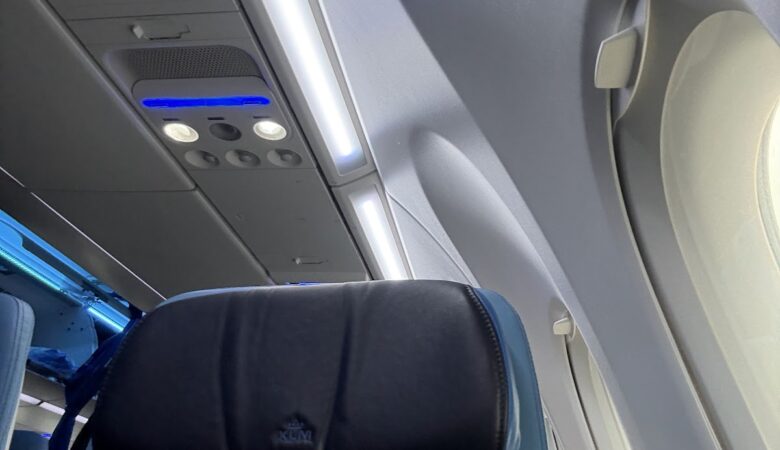
Primera Class is positioned at the front of the ferry, where the atmosphere was noticeably calmer. Large side windows and clear views across the bow flooded the cabin with natural light. Dedicated washrooms were clean and quiet, and overall noise levels were lower than elsewhere on the ship. The air conditioning, however, was relentless, making layers essential.

Seat

Seating in Primera Class was unassigned, making this a first come, first served arrangement. There were plenty of seats available, and we chose a pair right at the front on the port side, which turned out to be one of the better locations in the cabin.

The seats were wide leather recliners housed within a hard, shell like plastic frame. They felt robust rather than refined. At 5’10”, legroom was the main compromise. There wasn’t enough space to fully stretch out in front, and I had to angle into the aisle to extend my legs. Once the tray table was lowered, exiting the seat became awkward.

A USB A charging port was fitted, which Business Class lacked. While welcome, it wasn’t enough to materially separate Primera from the class below.

Business Class seats were very similar in comfort and layout, with the same leather recliner design. The main difference was the lack of USB charging ports, making the gap between Business and Primera feel marginal at best.

Food & Drink

Food service in Primera centred around a cafeteria located at the front of the cabin. Nothing was included in the ticket price, and prices were steep. Salmon and avocado on toast were listed at around USD33, which we admired rather than sampled.

The absence of any complimentary drink (even coffee) made Primera Class feel like an odd proposition. With broader food options available elsewhere on the ship, it was difficult to justify travelling in Buquebus Primera Class for any reason other than this review.

Onboard WiFi

Primera passengers had access to a dedicated Starlink WiFi network. A single access code was provided, usable on one device. Using both phone and laptop required either choosing one or paying extra for another token.

Speeds hovered around 1.8 Mbps down and 0.75 Mbps up, enough for messaging and light browsing. The connection was stable, though expectations should remain realistic on a crossing of this length

Arrival

Once vehicle passengers had returned to the lower decks, Primera passengers were invited to disembark first. What followed was unexpectedly entertaining. We were led in single file by a crew member through the ship, parading past other cabins while other passengers were physically blocked to prevent anyone joining. It felt faintly absurd and oddly ceremonial. Presumably it was “you snooze, you lose” carnage before they implemented the Primera procession.

Luggage collection was quick. Our bags were already circulating on the carousel by the time we reached the hall, which was impressive given we were among the first passengers to disembark.

From there, we were directed towards our connecting coach to Punta del Este. Staff checked tickets before issuing separate seat tickets for the bus. It’s pretty chaotic here, so you needed to be fairly assertive with other passengers, particularly while trying to load bags into the storage compartment underneath.

BG1 Verdict

BG1 rating

Buquebus Primera Class promised a calmer, more comfortable way to cross from Buenos Aires to Montevideo, and in some respects it delivered. The cabin was quieter than most, the forward views were excellent, and the dedicated WiFi network worked reliably throughout the crossing. Disembarkation was also genuinely efficient, with luggage ready quickly and immigration already taken care of before arrival.

That said, the upgrade never quite justified itself. The seat was comfortable, but no more so than those in Business Class. There were no complimentary refreshments, food prices were hard to ignore, and service felt functional rather than warm. For a product positioned above Business, it felt oddly thin on tangible benefits.

In short, Primera wasn’t bad, but it was easy to see who it was really for… people with money to spend.

BG1 Tip

If you’re debating whether to book Buquebus Primera Class, our review points towards Business Class as the smarter choice. Comfort is similar, value is stronger, and bringing your own snacks is wise unless you enjoy paying premium prices for modest onboard food.

If you’re continuing on to Punta del Este, check Buquebus bus connections before defaulting to a taxi. It’s far more cost effective, and easy to add even after booking.

Why not follow us on TikTok and Instagram.

Leave a Reply

Your email address will not be published. Required fields are marked *