There is something quite absurd about sipping a 23-year-old First Growth Bordeaux at 38,000 feet in a pressurised aluminium tube somewhere over the UK. Yet that is exactly what the Emirates wine cellar onboard is delivering. From October, First Class passengers on UK routes get served Château Mouton Rothschild 2003, a wine most people will never see on a restaurant list, let alone a drinks trolley.
The question is not whether these wines are good. They are. It is whether this is a serious investment or simply great PR, and whether you actually benefit from either.
Most assume airlines treat wine as an afterthought, buying it in bulk the year they serve it. What makes this interesting is not the price tag but how far ahead Emirates plan for the future passengers.
Inside the Emirates Wine Cellar Onboard
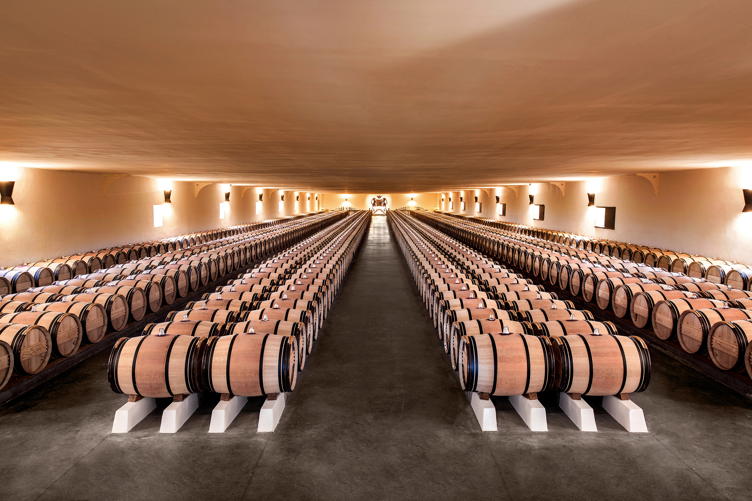
Emirates buys wine en primeur (meaning it purchases the wine before it is even bottled), then ages it for years before anyone gets a glass. Business class Bordeaux typically matures for eight to ten years, while First Class selections can sit for 12 to 15.
Around five million bottles rest in a cellar in France, not Dubai. Emirates chose France for temperature and provenance, rather than proximity to its hubSince 2006, the airline has spent more than USD 1 billion on the programme.
Fine wines featured in Emirates First Class service onboardPremium wine selection and glasses in aircraft cabin setting
This is where the investment argument actually holds up. Buying en primeur and ageing at scale is not a marketing stunt; it is a bet on the future. Emirates is not buying wine to pour next month. It is laying down Business and First Class stock for years to come. A decade from now, it will have a cellar no competitor can quickly replicate.
That is hedging: lock in supply and price today, and use the ageing years to build a pour that cannot be bought off the shelf later. The result is an experience Emirates creates years in advance for passengers it hasn’t even flown yet.
The Route Lottery
This is where it gets interesting, and slightly unfair. The wine you get depends on your route, not just your cabin, and none of it shows on the booking page. UK routes get Mouton Rothschild 2003 in First. And more surprisingly, Wiston Estate: a West Sussex sparkling wine whose Brut NV scored 96 points at the Decanter World Wine Awards 2026. WineGB has named Wiston Winery of the Year four times.
Emirates plane cruising at altitude above Dubai’s iconic skyline
Fly East Asia instead and you get Seña and a rare white Châteauneuf-du-Pape. Same airline, same billion-dollar cellar, completely different pour depending on where you happen to be flying from.
Industry observers consider Emirates a serious contender in airline wine, yet Wine Enthusiast has left it out of its top ten in recent years. Big spend does not guarantee critical love, and that mismatch is the clearest sign that this is both investment and PR at once: real cellar assets ageing quietly, wrapped in a headline number built for press releases.
A Billion-Dollar Cellar Meets a Pressurised Cabin
At 38,000 feet, your sense of taste and smell is dulled, muting some of the fruit and aroma in wine while making acidity and tannins feel more pronounced. That means big, bold reds like Bordeaux can taste harsher in the air, and the usual advice is to lean towards whites and lighter reds instead.
Which makes Emirates’ obsession with ageing rather more interesting. Age can change the equation. A mature Bordeaux has had time for its tannins to soften and its flavours to develop greater complexity, potentially making something like Emirates’ Château Mouton Rothschild 2003 a very different proposition at 38,000 feet from a much younger Cabernet-heavy Bordeaux.
Whether Emirates set out to solve the altitude problem or not, its strategy happens to produce wines that should be considerably better placed to cope with it. Hopefully one day we’ll get to put that theory of tasting the Château Mouton Rothschild 2003 at altitude to the test.
What Savvy Travellers Should Do
Check your route before you assume anything about what is in your glass. On UK flights from October, the Wiston Brut NV in Premium Economy beats plenty of European business class fizz, so it is worth seeking out even if you have not paid for the sharp end. If you are in First anyway, the Mouton is the actual draw.
The billion-dollar number is real, and so is the ageing strategy behind it. This is Emirates hedging on a future where a mature, differentiated cellar becomes the point of difference, not just the price tag. Whether you taste that benefit today depends entirely on where you sit and where you fly, which makes this less a wine list and more a very expensive bet on tomorrow’s passengers.
Would you book Emirates for the seat, the route, or the miles, or would you actually choose it for what is in the glass?


There is something quite absurd about sipping a 23-year-old First Growth Bordeaux at 38,000 feet in a pressurised aluminium tube somewhere over the UK. Yet that is exactly what the Emirates wine cellar onboard is delivering. From October, First Class passengers on UK routes get served Château Mouton Rothschild 2003, a wine most people will never see on a restaurant list, let alone a drinks trolley.
The question is not whether these wines are good. They are. It is whether this is a serious investment or simply great PR, and whether you actually benefit from either.
Most assume airlines treat wine as an afterthought, buying it in bulk the year they serve it. What makes this interesting is not the price tag but how far ahead Emirates plan for the future passengers.
Inside the Emirates Wine Cellar Onboard
Emirates buys wine en primeur (meaning it purchases the wine before it is even bottled), then ages it for years before anyone gets a glass. Business class Bordeaux typically matures for eight to ten years, while First Class selections can sit for 12 to 15.
Around five million bottles rest in a cellar in France, not Dubai. Emirates chose France for temperature and provenance, rather than proximity to its hubSince 2006, the airline has spent more than USD 1 billion on the programme.
This is where the investment argument actually holds up. Buying en primeur and ageing at scale is not a marketing stunt; it is a bet on the future. Emirates is not buying wine to pour next month. It is laying down Business and First Class stock for years to come. A decade from now, it will have a cellar no competitor can quickly replicate.
That is hedging: lock in supply and price today, and use the ageing years to build a pour that cannot be bought off the shelf later. The result is an experience Emirates creates years in advance for passengers it hasn’t even flown yet.
The Route Lottery
This is where it gets interesting, and slightly unfair. The wine you get depends on your route, not just your cabin, and none of it shows on the booking page. UK routes get Mouton Rothschild 2003 in First. And more surprisingly, Wiston Estate: a West Sussex sparkling wine whose Brut NV scored 96 points at the Decanter World Wine Awards 2026. WineGB has named Wiston Winery of the Year four times.
Fly East Asia instead and you get Seña and a rare white Châteauneuf-du-Pape. Same airline, same billion-dollar cellar, completely different pour depending on where you happen to be flying from.
Industry observers consider Emirates a serious contender in airline wine, yet Wine Enthusiast has left it out of its top ten in recent years. Big spend does not guarantee critical love, and that mismatch is the clearest sign that this is both investment and PR at once: real cellar assets ageing quietly, wrapped in a headline number built for press releases.
A Billion-Dollar Cellar Meets a Pressurised Cabin
At 38,000 feet, your sense of taste and smell is dulled, muting some of the fruit and aroma in wine while making acidity and tannins feel more pronounced. That means big, bold reds like Bordeaux can taste harsher in the air, and the usual advice is to lean towards whites and lighter reds instead.
Which makes Emirates’ obsession with ageing rather more interesting. Age can change the equation. A mature Bordeaux has had time for its tannins to soften and its flavours to develop greater complexity, potentially making something like Emirates’ Château Mouton Rothschild 2003 a very different proposition at 38,000 feet from a much younger Cabernet-heavy Bordeaux.
Whether Emirates set out to solve the altitude problem or not, its strategy happens to produce wines that should be considerably better placed to cope with it. Hopefully one day we’ll get to put that theory of tasting the Château Mouton Rothschild 2003 at altitude to the test.
What Savvy Travellers Should Do
Check your route before you assume anything about what is in your glass. On UK flights from October, the Wiston Brut NV in Premium Economy beats plenty of European business class fizz, so it is worth seeking out even if you have not paid for the sharp end. If you are in First anyway, the Mouton is the actual draw.
The billion-dollar number is real, and so is the ageing strategy behind it. This is Emirates hedging on a future where a mature, differentiated cellar becomes the point of difference, not just the price tag. Whether you taste that benefit today depends entirely on where you sit and where you fly, which makes this less a wine list and more a very expensive bet on tomorrow’s passengers.
Would you book Emirates for the seat, the route, or the miles, or would you actually choose it for what is in the glass?
Give us a follow on TikTok and Instagram.
Related Articles
Air France Wins Best First Class: Does It Beat Emirates?
Singapore Airlines’ New Amenity Kits (but don’t mention the new seats)
British Airways promises a new era of luxury. Can it actually deliver?
Etihad A330neo Business Class Arrives Amid continuing regional uncertainty