

European Business Class rarely surprises, and KLM has spent years proving that point with admirable consistency. The airline has never pretended its short-haul product was about clever seat engineering or extra inches of personal space. Instead, it has long leaned on service, scheduling and ground perks, while passengers sit in familiar slimline economy seats with the middle blocked. The arrival of the A321neo did not change that philosophy. It modernised the cabin, sharpened the look, and replaced some frankly tired 737 interiors, but it did not magically turn short hops into something plush. That context matters when judging the KLM A321 European business class product, because expectations tend to drift faster than reality. On this flight home from a short workation, routing via Amsterdam felt like a good excuse to see how the newer aircraft stacked up in day-to-day use. Was it merely cleaner and quieter, or had KLM quietly nudged things forward?
In this review
Flight Details
Flight No: KL1788
From/To: Berlin (BER) to Amsterdam (AMS)
Departure time: 14:25
Ticket Class: Business
Flight time: 1 hour 20 mins
Frequent Flyer Points: 480 (credited to Virgin Atlantic)
Status Points: 10
Aircraft: PH-AXB
Aircraft type: Airbus A321neo
Number of classes: 2
Number of seats in flying class: 20
Seat: 2A
Position: left hand side of the aircraft, second row from the front
Airport Experience
The airport phase was refreshingly calm. Check-in was quiet and efficient, with no queues forming at the desks. Security Control 1 (through door at the far end of terminal 1) had recently introduced new scanners, which immediately improved the flow. Liquids and electronics stayed in bags, and the whole process moved at a steady pace rather than the usual stop-start shuffle.
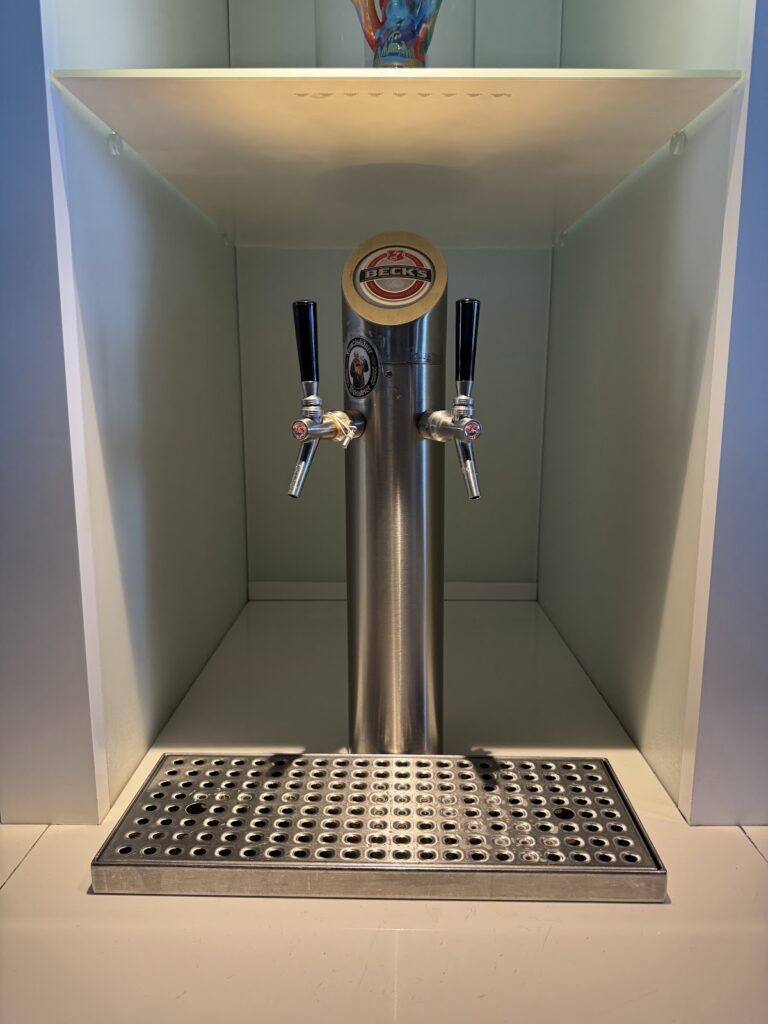
I headed to the Tempelhof Lounge, which was fairly busy but still functional. Seating was tight in places, though turnover remained constant enough to avoid the feeling of being stuck. The food was reasonable without being memorable, but it did the job for a short stay. One small but noticeable improvement was the updated water taps. Still and sparkling water dispensed quickly, fixing what had previously been a painfully slow affair that seemed to take longer than boarding itself.
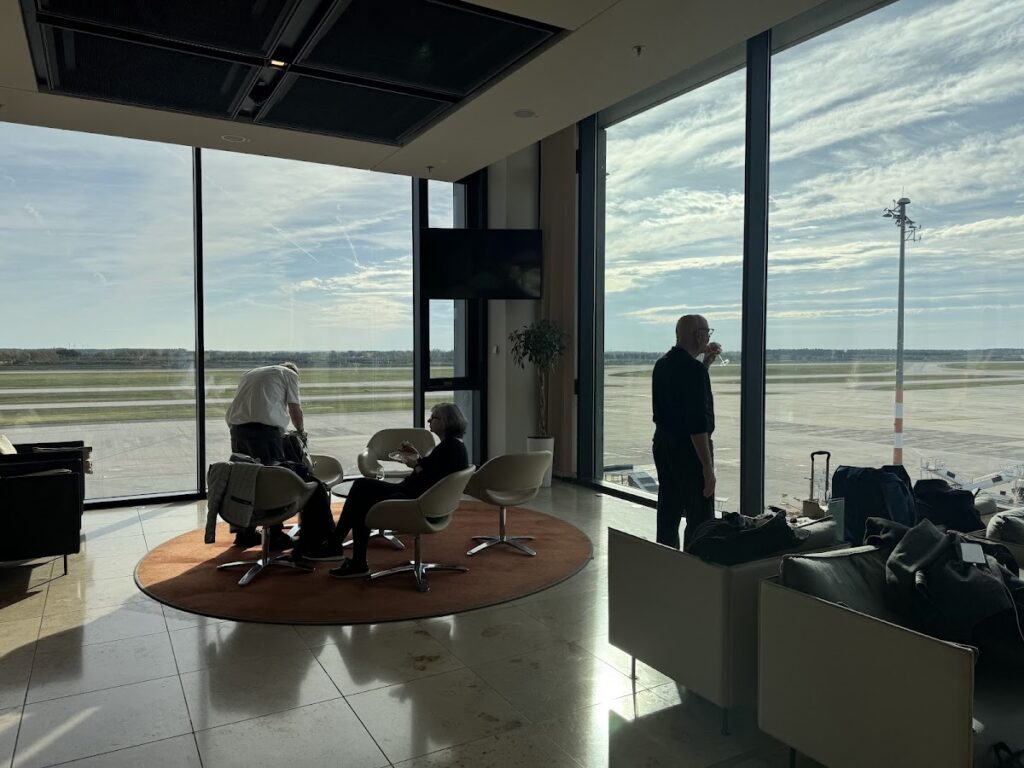
Overall, the ground experience did what it needed to do. Nothing felt rushed or chaotic, and there were no friction points worth calling out.
Boarding & Welcome
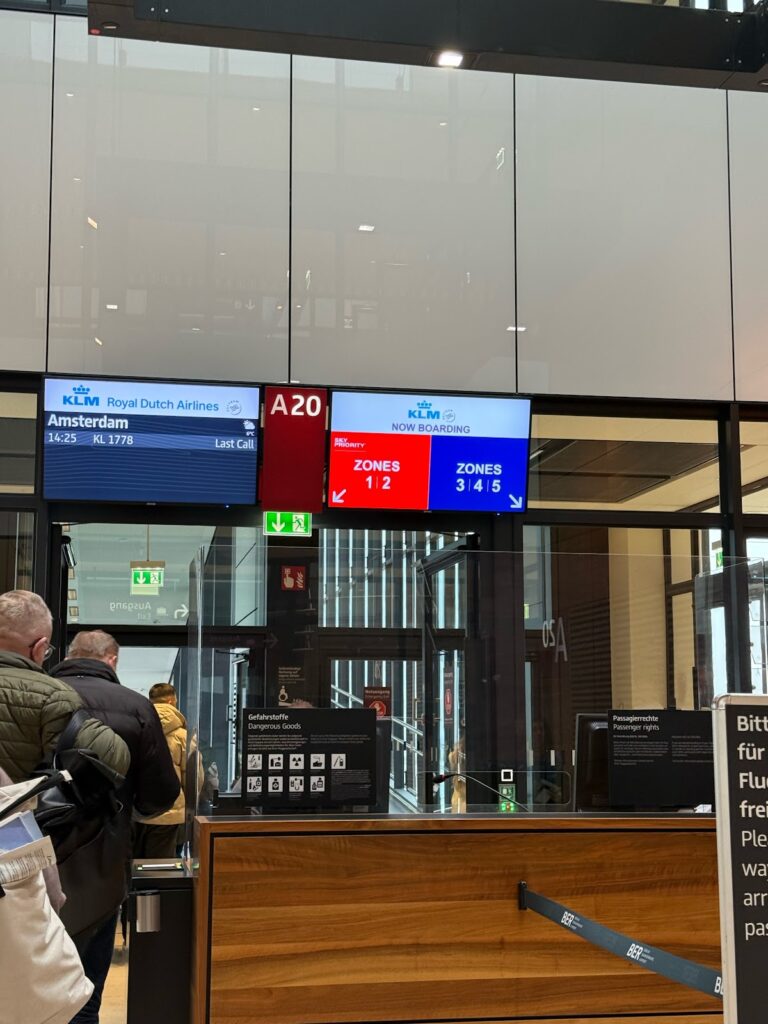
My KLM flight boarded from gate A22, which was directly beneath the Templehof lounge – the shortest walk I’ve ever done from the lounge to the gate at BER! When I got there, things were well managed and clearly structured. Separate lanes were used for groups 1 and 2 – business class and SkyPriority – with everyone else held back until the priority flow had cleared. Enforcement was consistent and made the process feel orderly.
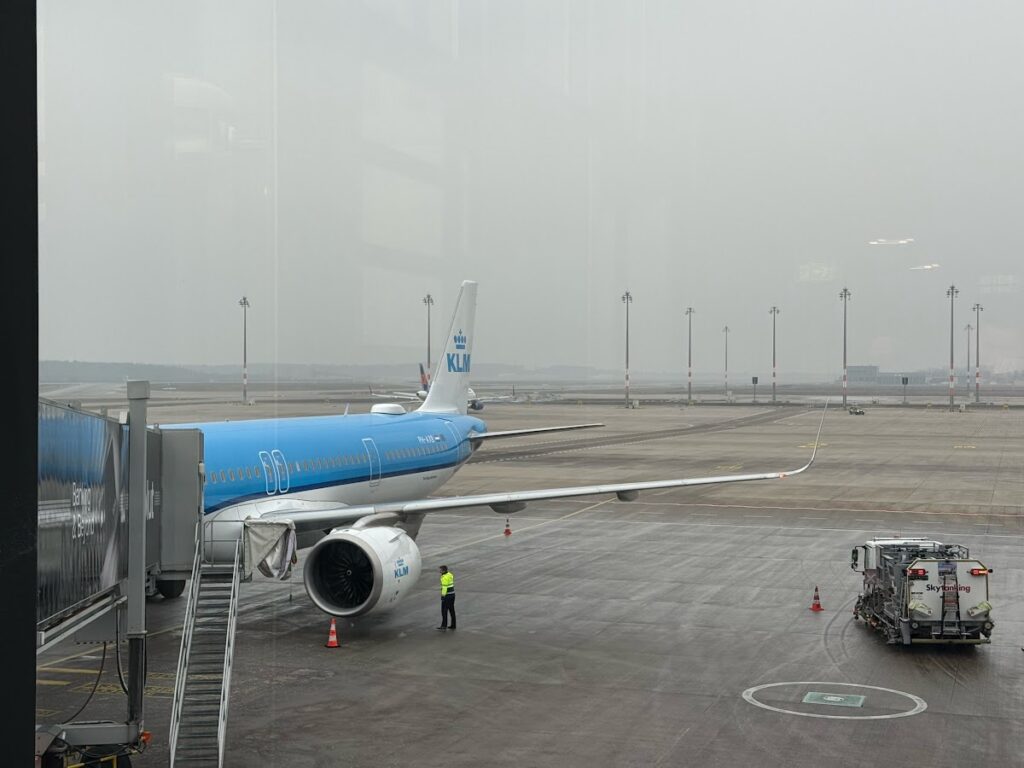
There was a short pause on the jet bridge before stepping onboard, though it never tipped into frustration. Once boarding resumed, the flow remained steady. Two crew members were positioned at the aircraft door, greeting passengers as they entered.
First impressions were positive – the 1 year old cabin felt clean, modern, and quieter than KLM’s older 737s, with none of the visual tiredness that has crept into parts of that fleet. Boarding concluded without drama, and the door closed on time. For a short European sector, this was exactly how the process should run.
Seat
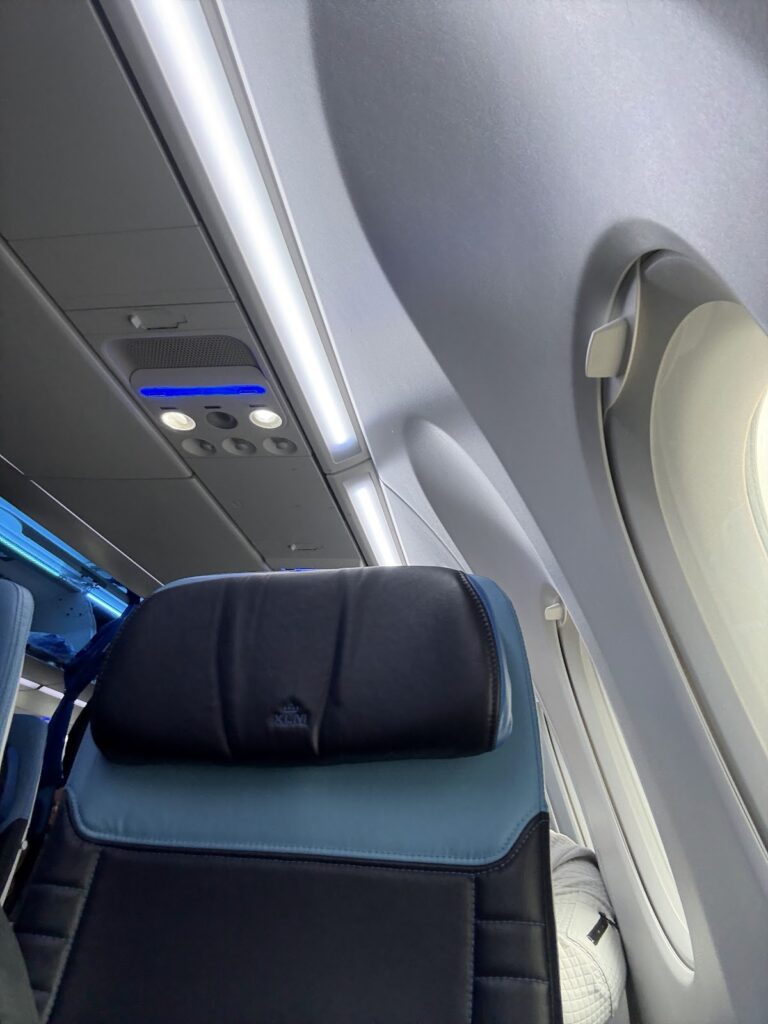
The seat itself followed the familiar European business class formula. This was an economy seat with the middle blocked, rather than a bespoke product, but the A321neo’s newer generation slimline seats immediately felt more structurally sound than the worn examples found on older aircraft. The padding was firmer, but it avoided the sagging, compressed feel that had plagued KLM’s ageing 737 cabins.
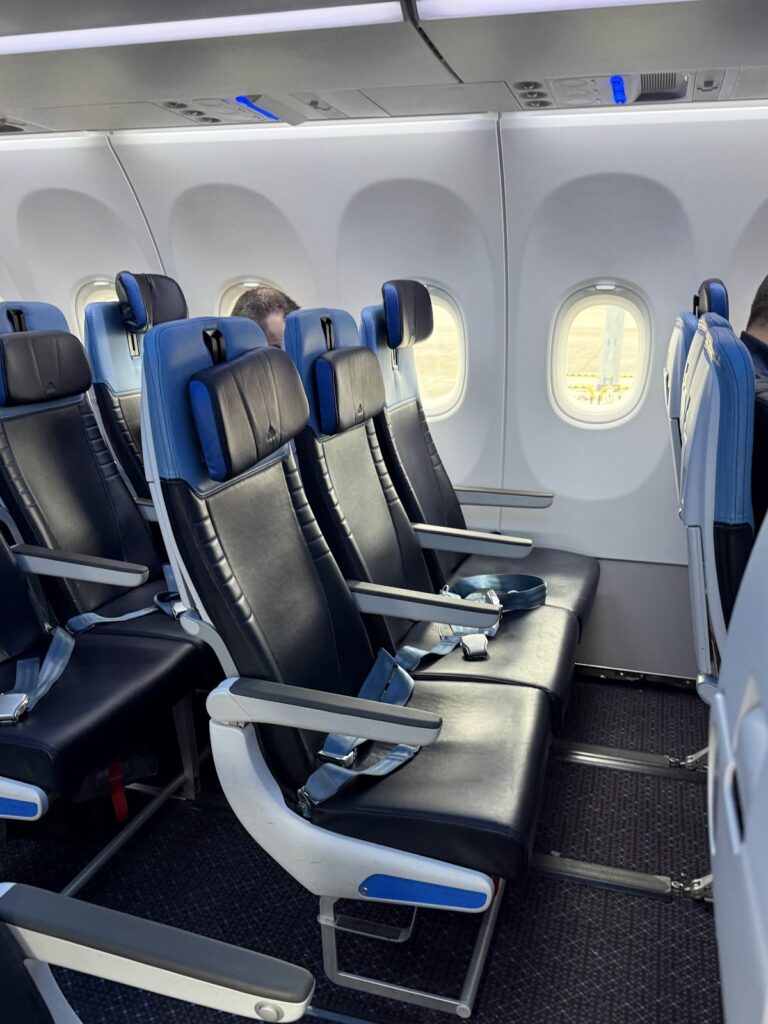
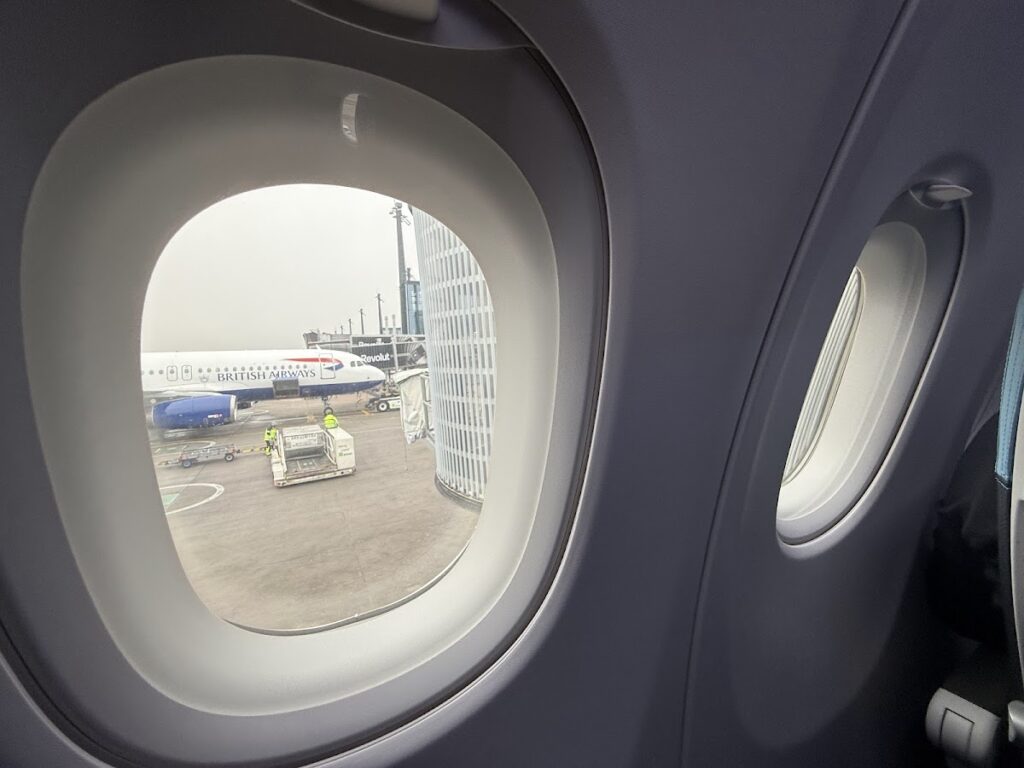
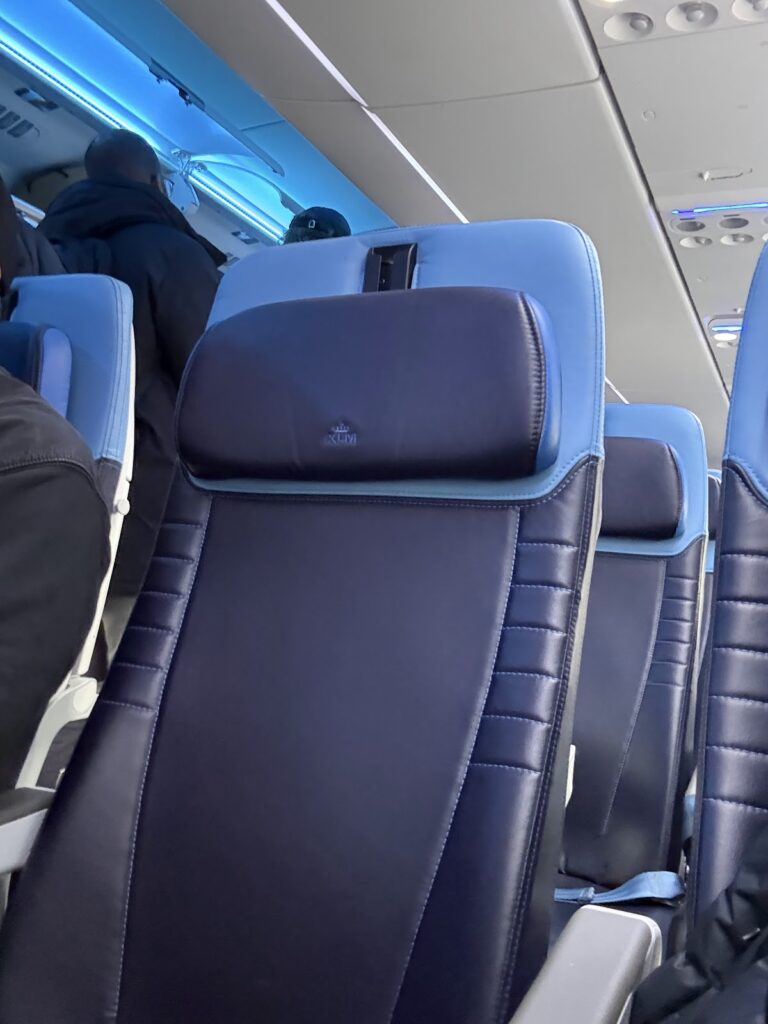
Legroom felt marginally better than the economy seat I had used on the outbound leg, though that difference may have owed more to aircraft variation than deliberate configuration. Storage was typical for the class, with tray tables folding down from the seat in front (or armrest on row 1) and no meaningful personal space beyond what the blocked middle provided.
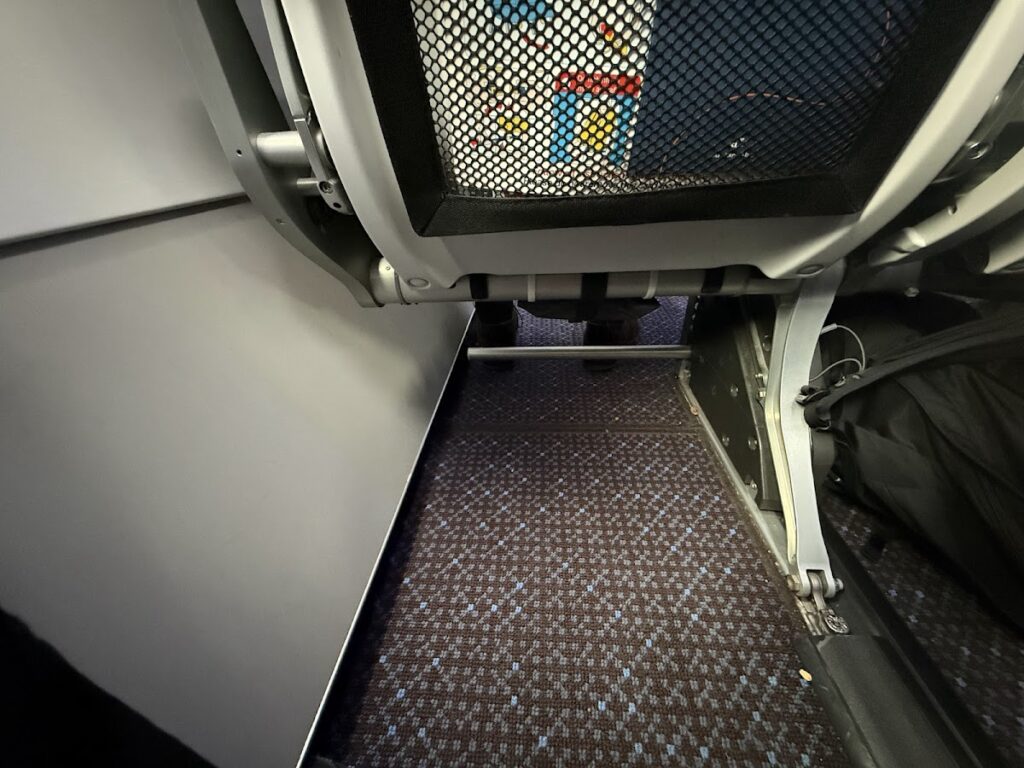
One frustration was overhead bin management. By the time I boarded, the bins above row 2 were already full. This was not due to volume, but to passengers failing to use the sideways stacking these larger A321 bins support. A little more crew intervention here would have gone a long way towards preventing unnecessary cabin shuffling later on.
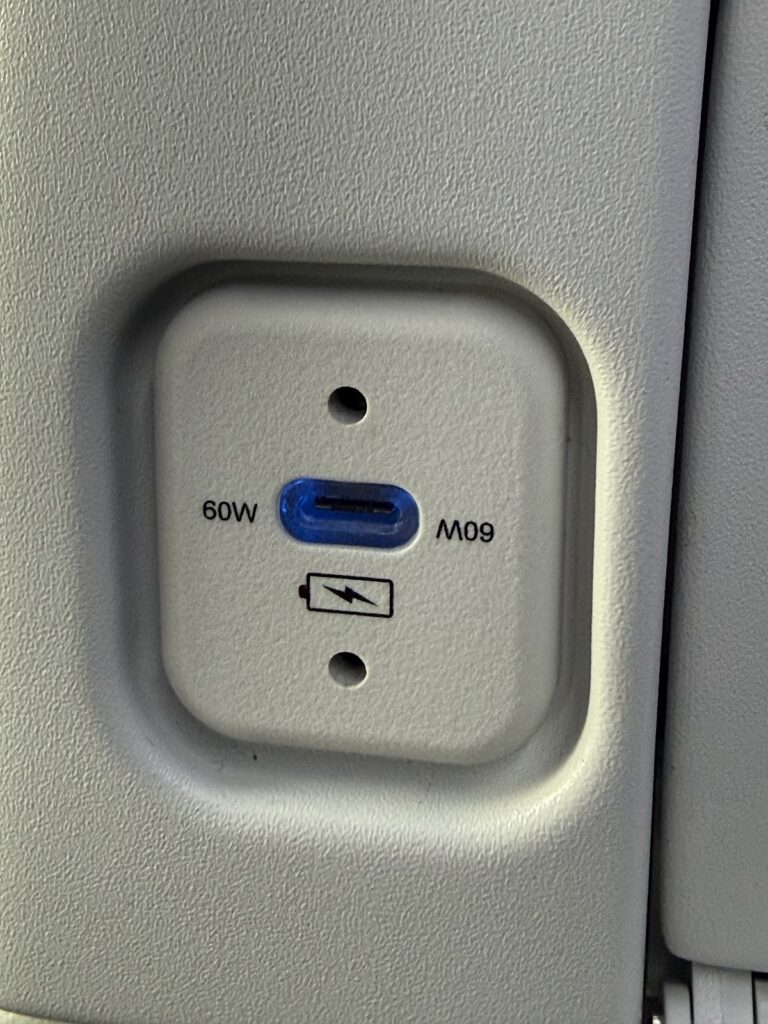
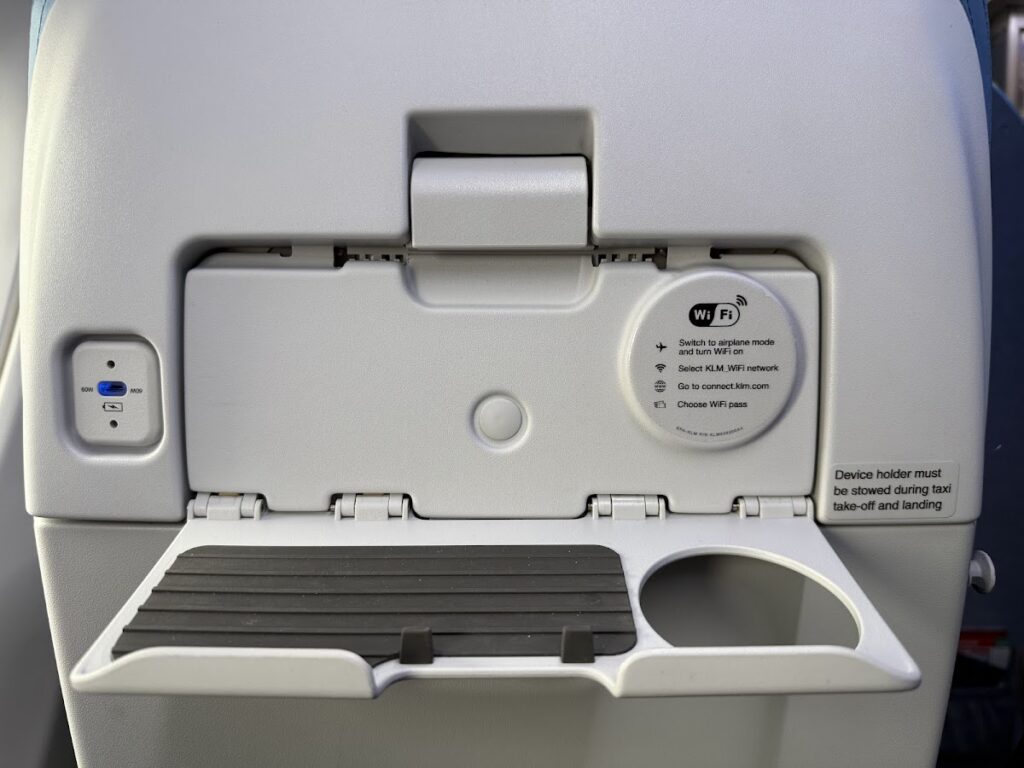
A powerful 60w USB-C charging port was located on each seat back, which provided fast charging for mobile phones and could even put a bit of charge in my laptop!
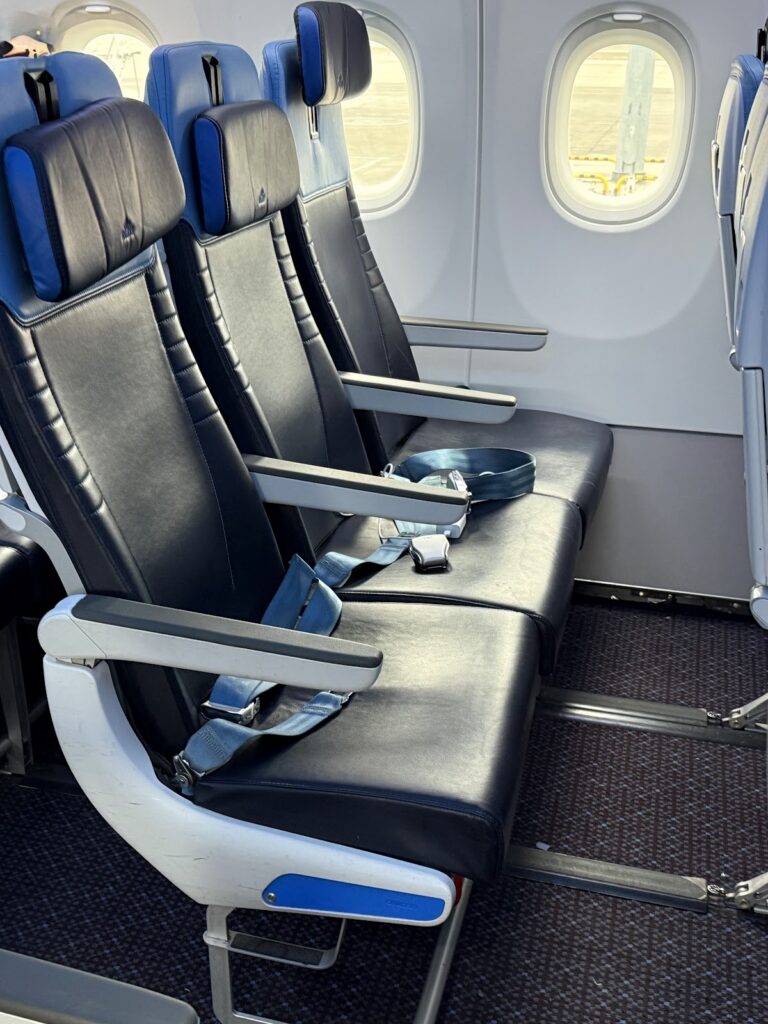
For a flight of this length, the seat was adequate. Beyond that, the reduced cushioning would quickly become noticeable.
Which is the best seat on KLM A321 Business Class?
Row 2 emerged as the most balanced business class option on this KLM A321. It sat far enough forward to benefit from quicker service, while avoiding the galley traffic and noise that often affect the bulkhead row. Access to overhead storage was straightforward once boarding settled, and the row offered a comfortable amount of space to stretch out without feeling hemmed in. A added bonus is the use of a personal device holder – seats on row 1 don’t get this.
See the seating plan on AeroLOPA.
Onboard Experience
The onboard atmosphere was relaxed from the outset. With only around half of the 20 business class seats occupied, the cabin never felt busy. Crew moved through the aisle easily, and service pacing felt unhurried without dragging.
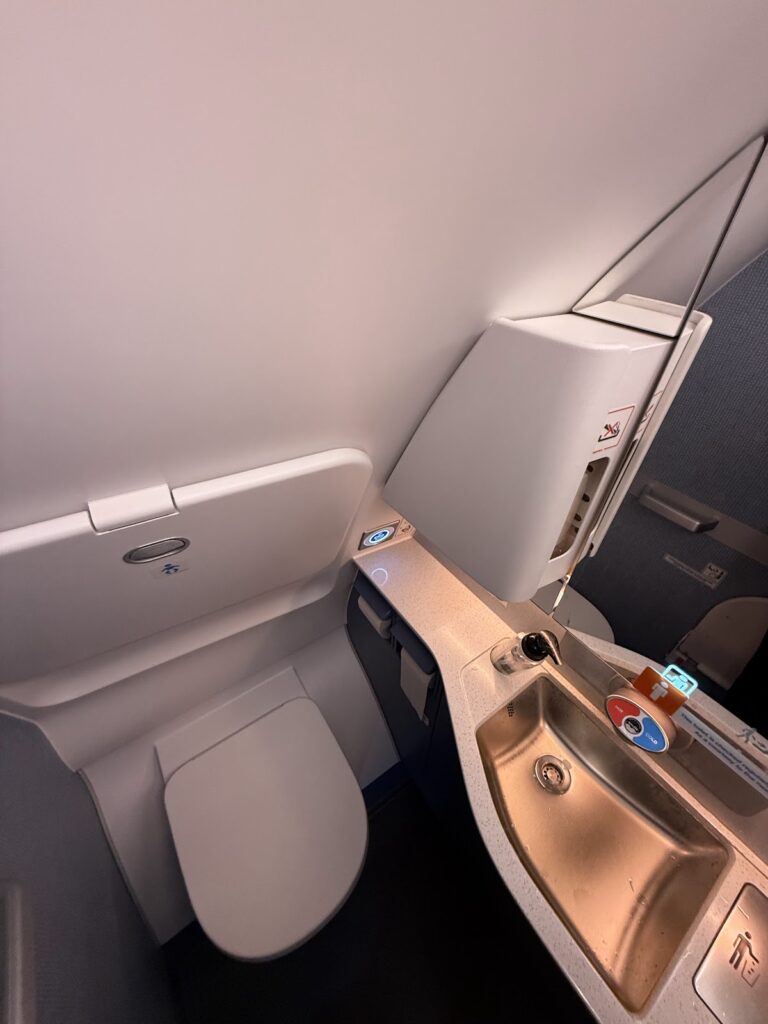
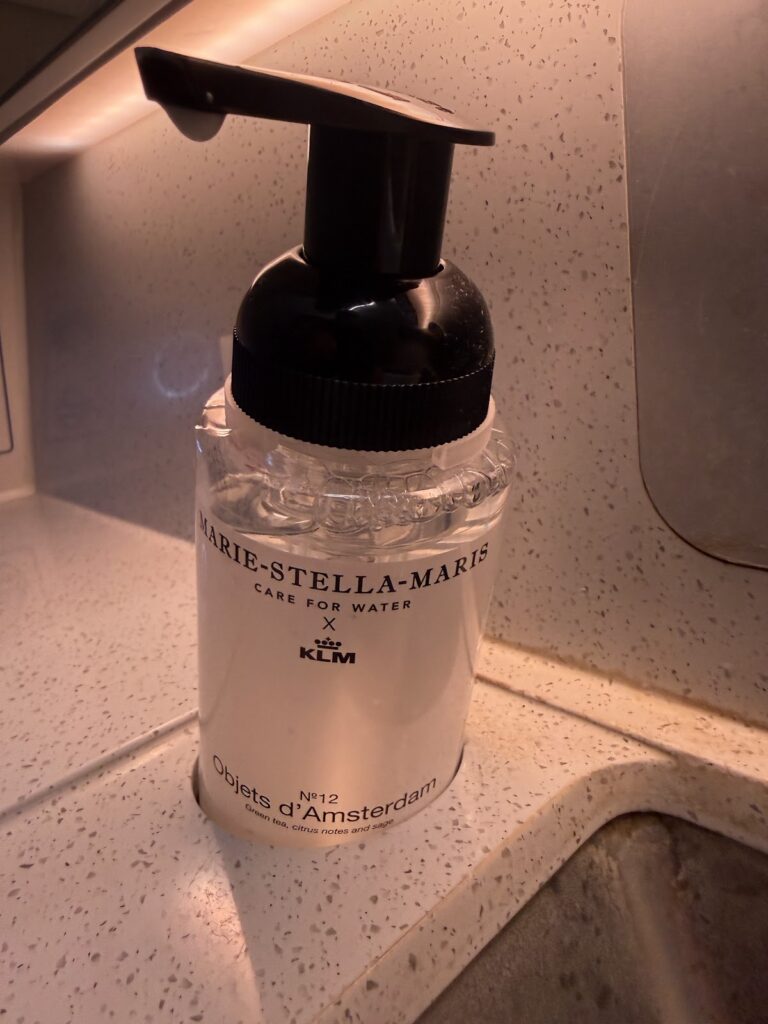
A single washroom at the front was reserved for the premium cabin. Inside, a looping forest soundscape played, complete with birdsong. It was novel rather than luxurious, and while it raised a smile, it did little to elevate the space beyond the basics. Hand towels were absent when I visited, which stood out more than the piped audio.
Noise levels in the A321neo were noticeably lower than on older narrowbodies, making focused work or just simple relaxation that bit easier. Overall, the cabin felt modern and efficient, if not particularly distinctive.
Food & Drink
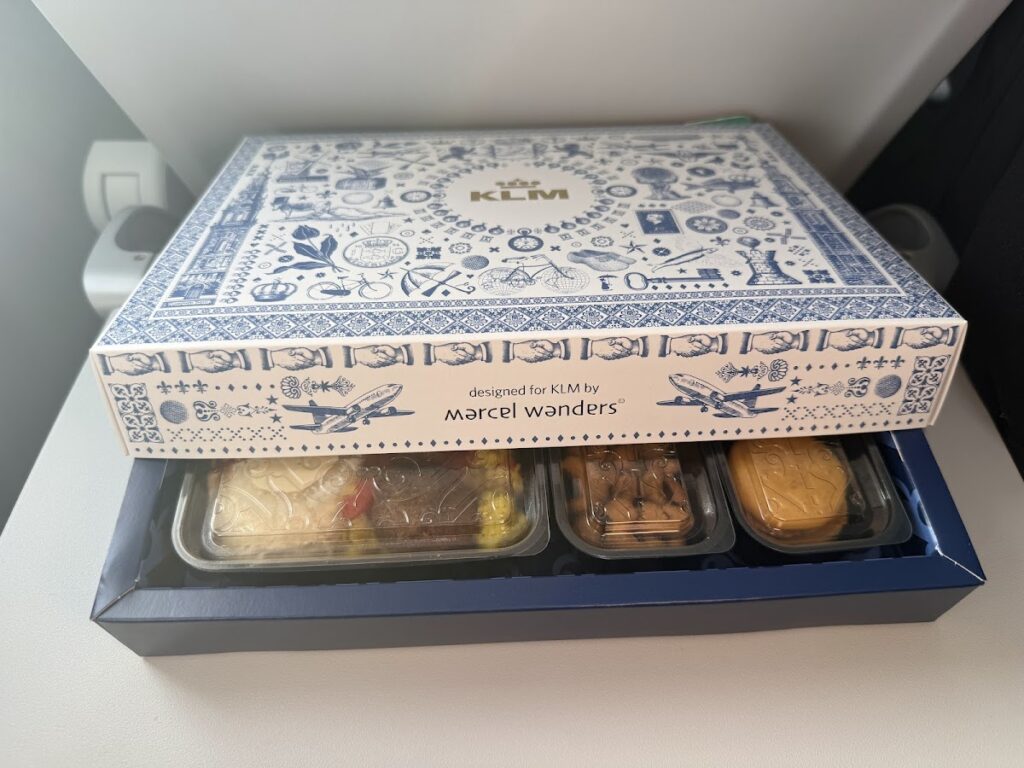
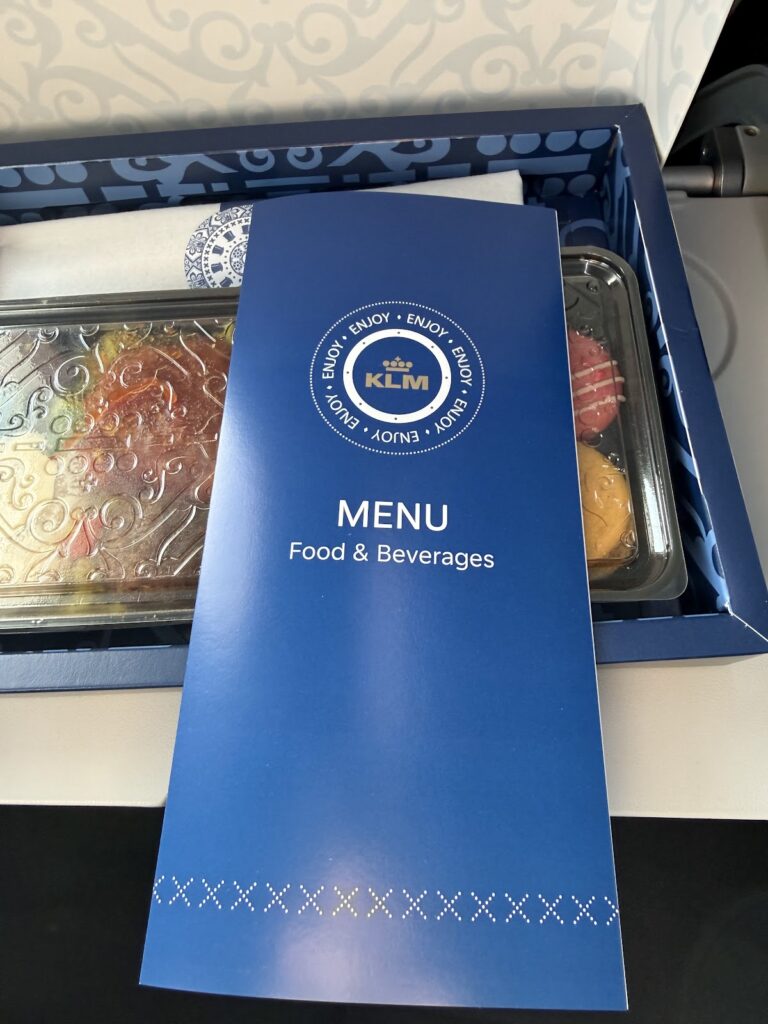
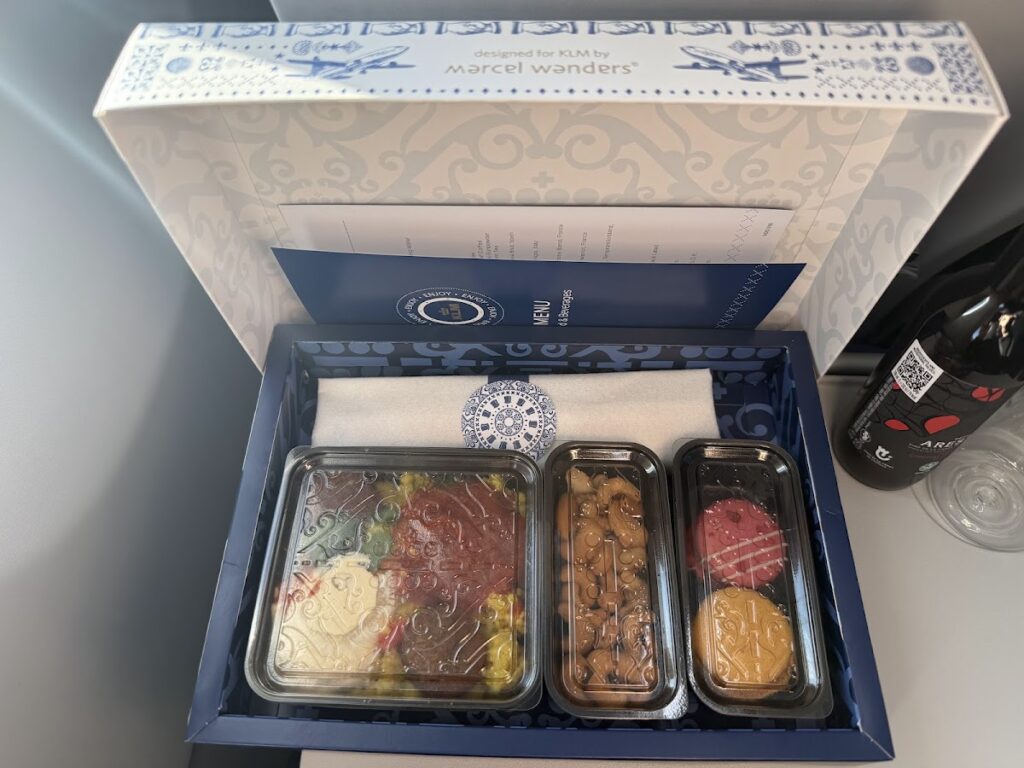
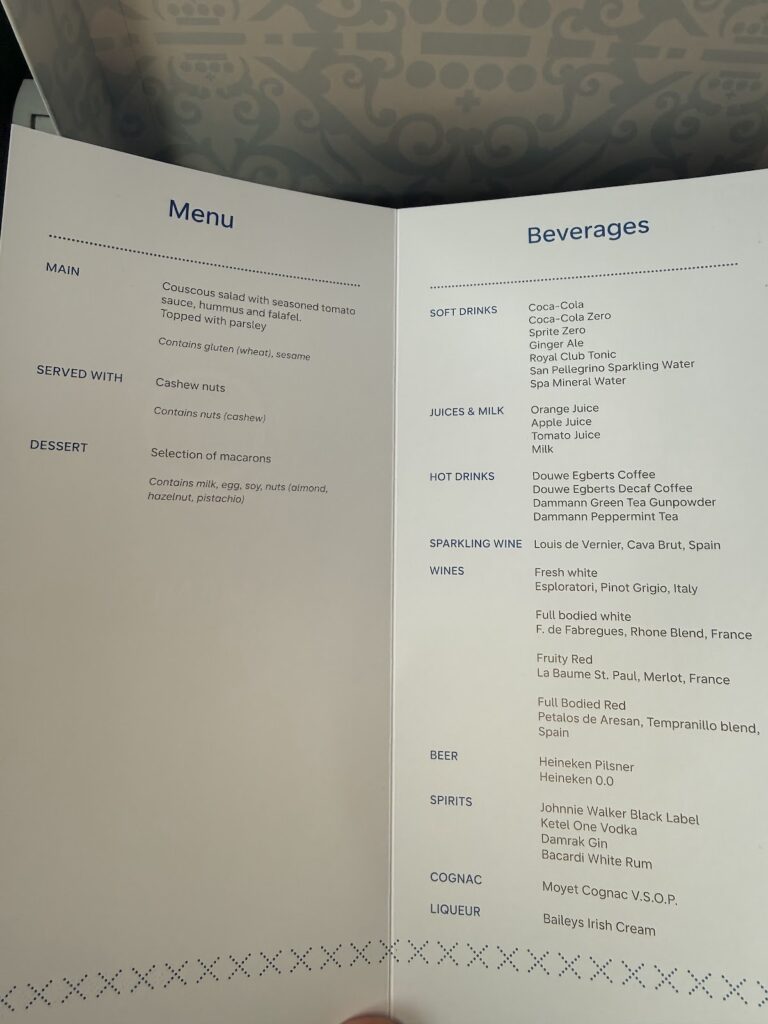
Catering arrived about 30 minutes after take-off in a compact presentation box designed by Marcel Wanders. Inside was cous-cous with falafel and humous. The dish was neatly assembled and tasted fine, though it felt slightly mismatched for a winter flight between two cold destinations. It was light and fresh when something warmer would have landed better. The two macarons for dessert were a bit too chewy for my liking.
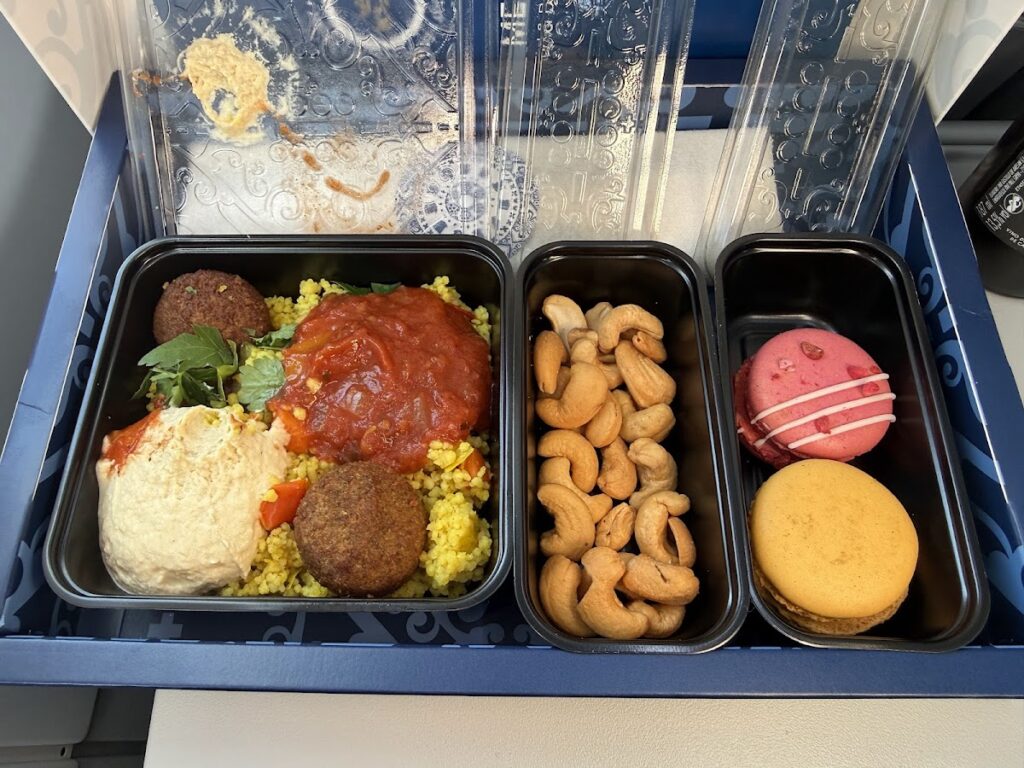
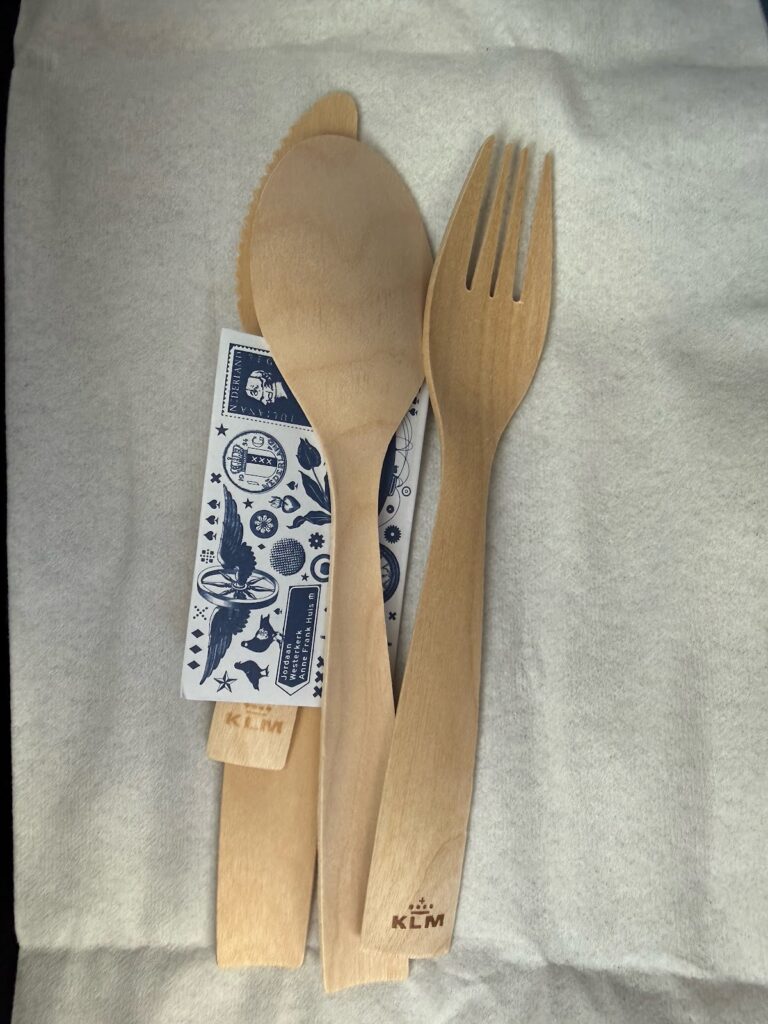
Fortunately, I had eaten in the lounge beforehand, which softened the impact. Drinks service was handled efficiently, with an organic Tempranillo blend proving a solid choice. Sparkling water was available, and everything was served in KLM-branded glassware rather than plastic, which helped maintain a premium polish.
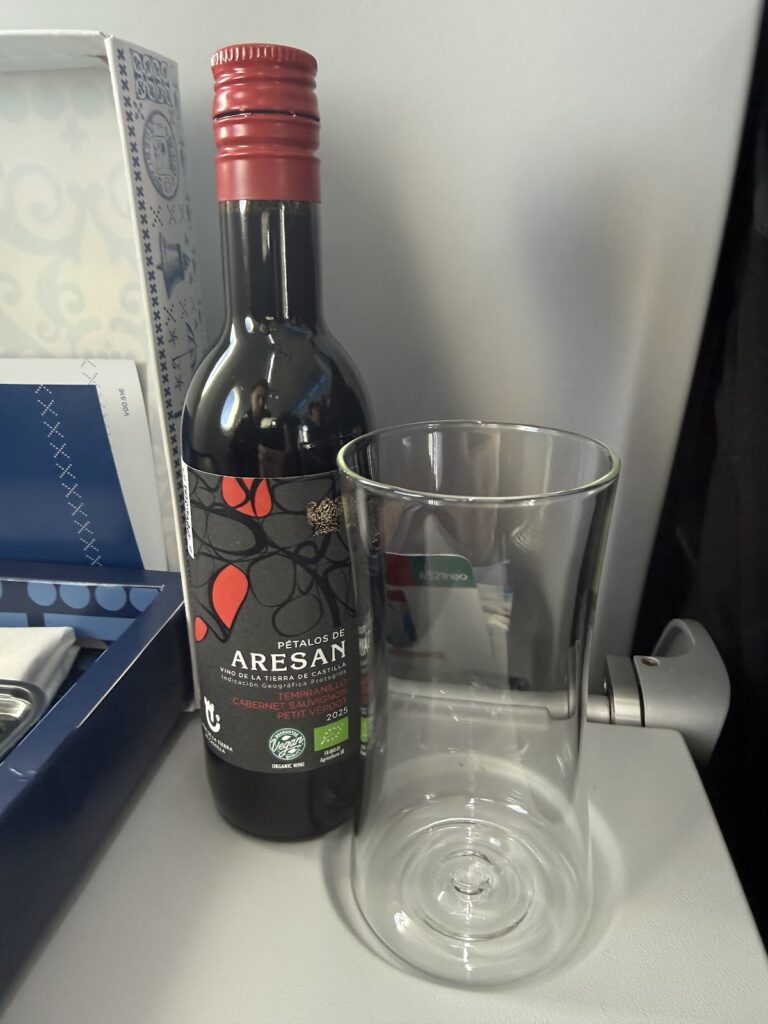
Nothing here disappointed outright, but nothing lingered either. It was competent catering that did the job without making a strong impression.
In-flight Entertainment
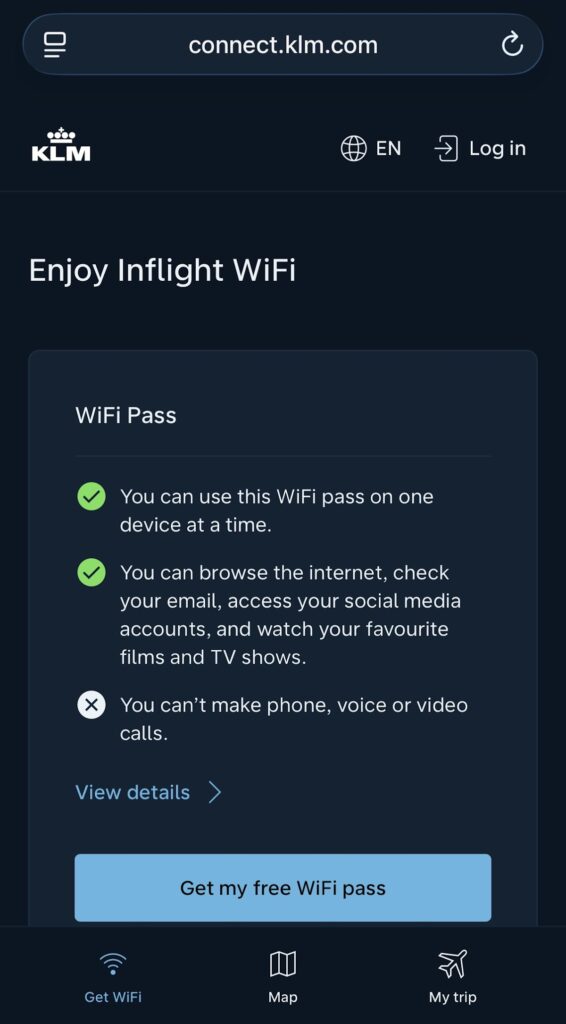
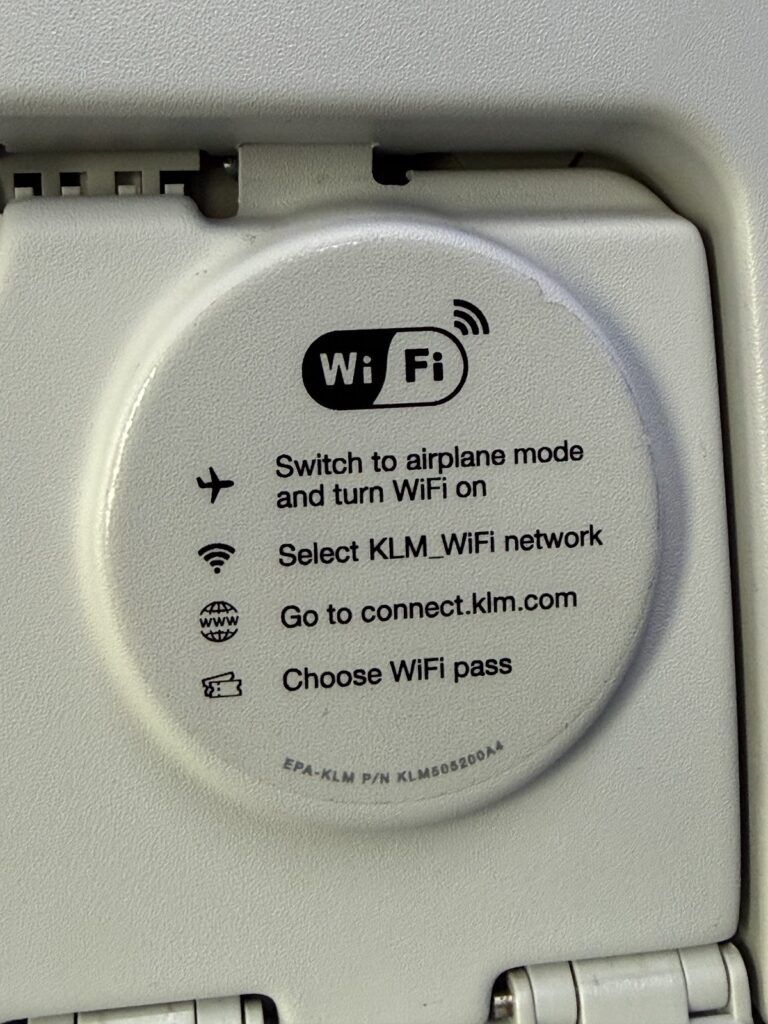
Connectivity was one of the stronger elements of the flight. WiFi was free when logging in with a Flying Blue account and provided full internet access rather than being restricted to messaging. Speeds were sufficient for streaming, and VPN use worked without issue, which made it easy to stay productive.
There were no seatback screens, with entertainment handled entirely through personal devices. The portal was easy to access and stable throughout the flight. Power availability supported phone and tablet use, and the quiet cabin made it a workable environment for short tasks or light browsing.
For a short-haul European service, the technology performed exactly as needed.
Arrival
Arrival into Amsterdam Schiphol was perfectly on time. Disembarkation was swift, helped by the attached jet bridge and a lightly loaded forward cabin. Moving between Schengen and non-Schengen areas was painless, with e-passport gates completely clear.
Schiphol itself felt calm and well organised, particularly impressive given the disruption caused by ice only days earlier. Signage was clear and passenger flow remained smooth throughout the terminal. It was a reminder that when Schiphol runs well, it runs very well.
BG1 Verdict
Taken as a whole, the product leaned heavily on efficiency rather than indulgence. KLM Short-haul Business Class on their newer A321 neo delivered a modern cabin, reliable connectivity, and a smoother ride than KLM’s older narrowbody fleet. The seat was an improvement over worn 737 interiors, but the firmer padding meant comfort tapered off quickly as flight time increased.
Catering was adequate but unremarkable, and the premium value rested more on ground benefits, service flow, and time savings than on anything happening at seat level. This worked well for short hops, but expectations needed to be set accordingly.
It was a sensible, well-run product that did not overpromise.
BG1 Tip
Use Security Control 1 at Berlin Brandenburg – it uses the newer scanners that avoid you removing laptops and liquids from bags. Far more efficient!
Why not follow us on TikTok and Instagram.
Leave a Reply