

Short answer? No. The more accurate answer? It’s a matter of etiquette. Business Class overhead bin etiquette is not something airlines publish in their fare rules.
On a recent short haul flight from Kota Kinabalu to Kuala Lumpur, two passengers seated in Economy boarded early with Group 1, likely Emerald status. They placed their bags in the Business Class overhead bins… and then continued walking to rows 12 and 13 where their exit row seats were.
As some of the first to board, there was plenty of overhead bin space available before their seats. Yet the instinct was to deposit their bags in Business and move on. Now add a little context.
This was an older 737-800. Overhead capacity is not generous. Unlike newer aircraft that allow bags to be loaded vertically, these bins fill quickly. To make matters tighter, the first two overhead bins above row 1 were already closed, filled with aircraft equipment. That left only a handful of usable spaces in the forward cabin.
Then four more Business Class passengers boarded. Suddenly, there was nowhere for their cabin bags. And that is where the tension began.
What followed was an awkward game of overhead bin Tetris, with cabin crew politely requesting some Business passengers to place their bags under the seat in front.
“I’m sorry, but I had my bag in that space.”
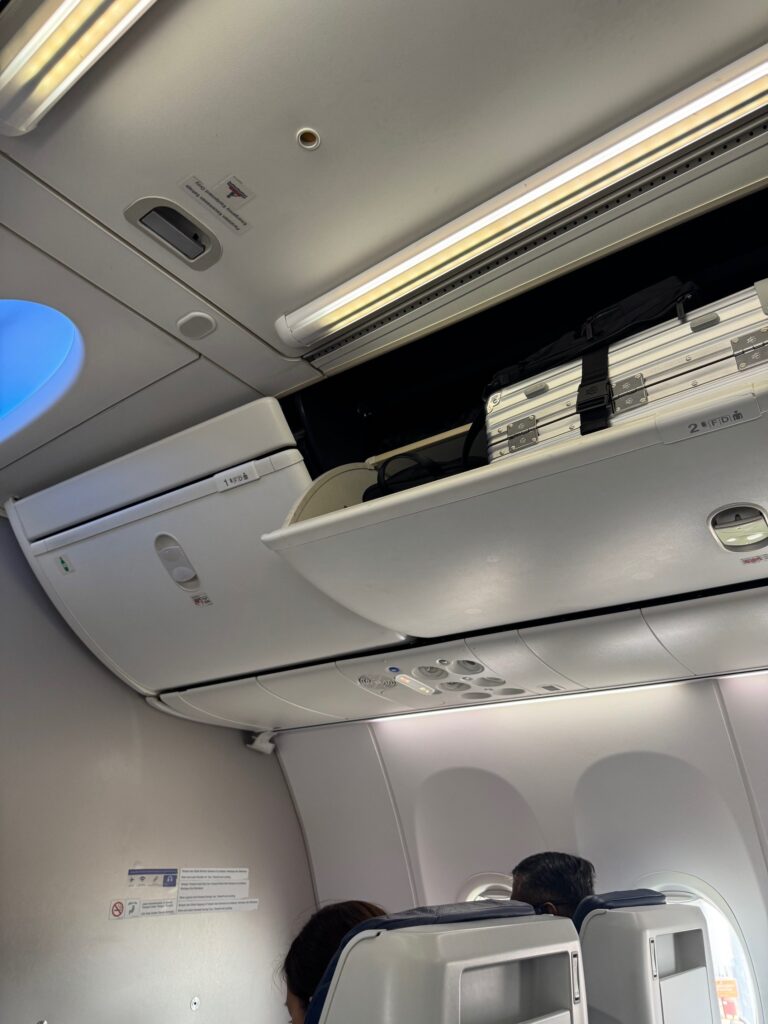
I had my bag ready to go up but was briefly taking something out. In that split second, another Business Class passenger moved in to claim the same space. After a short internal crisis and some prolonged eye contact, I said; “I’m sorry, but I had my bag in that space.” Polite. Calm. Slightly awkward.
In hindsight, I could have pointed out that some of the already limited space had been taken by passengers seated further back, and asked the cabin crew to manage it. But instead, I did what I do best. Stayed polite. Sat down. And simmered in mild annoyance.
The bigger issue
Technically, those passengers were not breaking any rules, and that is where the debate becomes interesting. We did not realise quite how contentious this topic was until we asked a community of frequent flyers. More than 100 comments and widely differing views, some very polar. But at its core, this isn’t about luggage. It is about etiquette, expectations, and whether passengers should feel responsible for enforcing unwritten standards of behaviour.
Airlines blur the lines
Some airlines actively manage overhead bin space in premium cabins. Others do not.
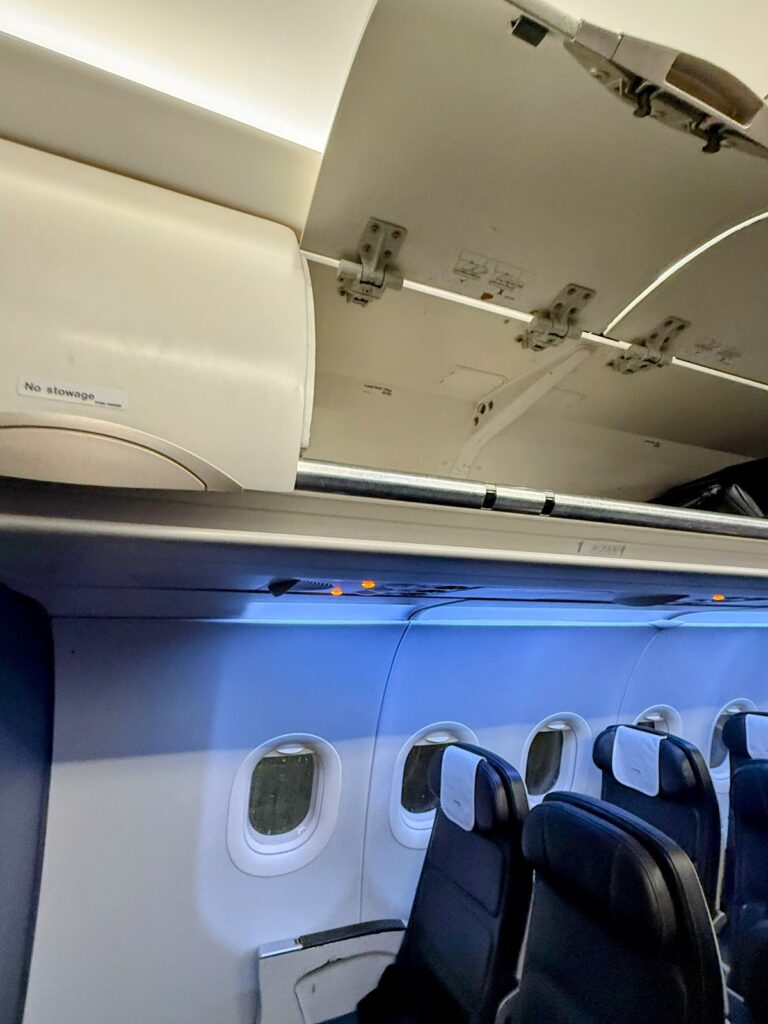
British Airways, for example, does not formally reserve overhead bins for Club Europe. That ambiguity creates tension. If there is no policy, everything becomes first come, first served.
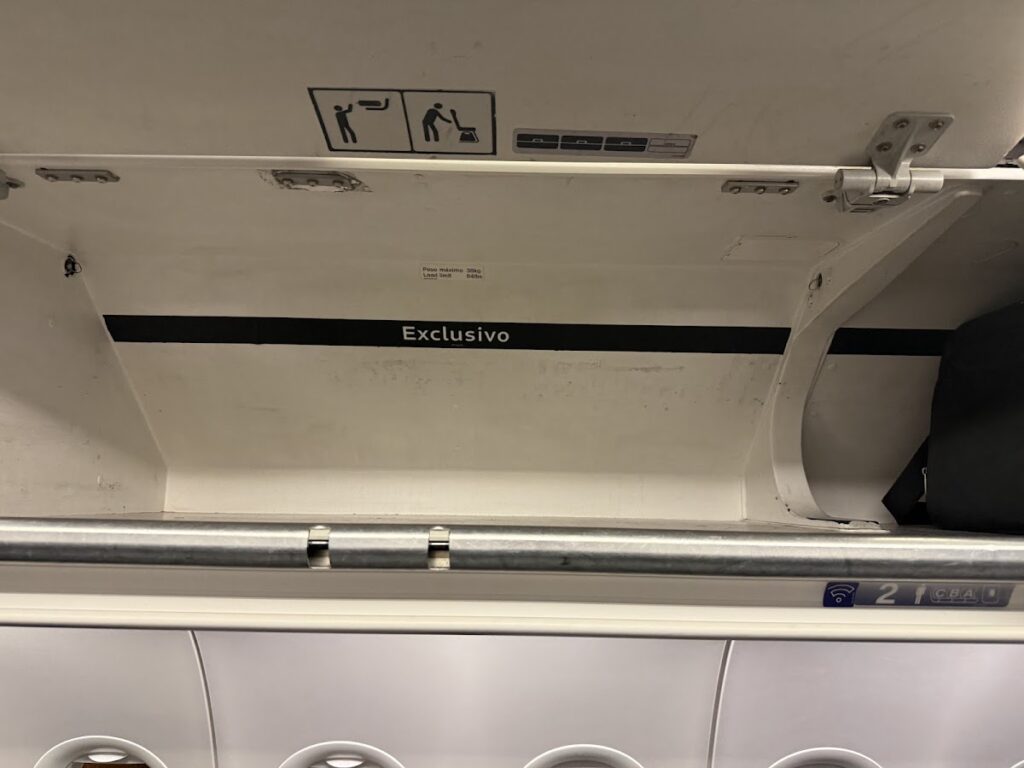
By contrast, other carriers take a much clearer stance. LATAM and KLM labels overhead bins in Business Class and often keeps them closed until premium passengers store their bags. On many easyJet flights, cabin crew are surprisingly proactive, monitoring bin use during boarding and preventing the classic “drop and walk” manoeuvre.
When airlines set clear expectations, drama tends to reduce. When they do not, passengers are left to negotiate social norms at the aircraft door. It matters more when hand baggage allowances are generous but aircraft storage is limited, conflict is almost inevitable.
Business Class overhead bin etiquette: rules or expectations?
At its heart, this is not about a suitcase. It is about perceived fairness. If you have paid for Business Class, you expect a smoother boarding experience. You expect less friction. Not necessarily luxury. But predictability. Watching someone from Economy use the limited space above your seat, when they had alternatives further back, feels less like efficiency and more like opportunism.
Yet there is another angle. If all Business passengers are seated and space remains, does it really matter? Probably not. The real friction occurs during boarding, when premium passengers are being asked to compromise because others have pre-emptively claimed space. That is where resentment brews.

So, do you own the bin?
Legally? No. Morally? Many think yes. Operationally? It depends entirely on the airline. And that is perhaps the real issue. When airlines leave Business Class overhead bin etiquette undefined, passengers are left to interpret it themselves. Some see it as first come, first served. Others see it as part of the premium experience. That gap is where friction happens.
The airlines that manage this well remove the ambiguity. Clear labelling. Closed bins during boarding. Cabin crew gently directing passengers to use the space above their own seats. It does not need confrontation, just consistency. Because expecting passengers to negotiate unwritten social contracts at the aircraft door is always going to be messy.
Our view? If overhead space is part of the premium experience, then it should be managed as such. Not as an unregulated free-for-all. Because the alternative is polite standoffs, intense eye contact, and softly spoken sentences beginning with, “I’m sorry, but…”
What do you think? Do You Own the Overhead Bin Above Your Seat in Business Class?
Why not follow us on TikTok and Instagram.

Leave a Reply