
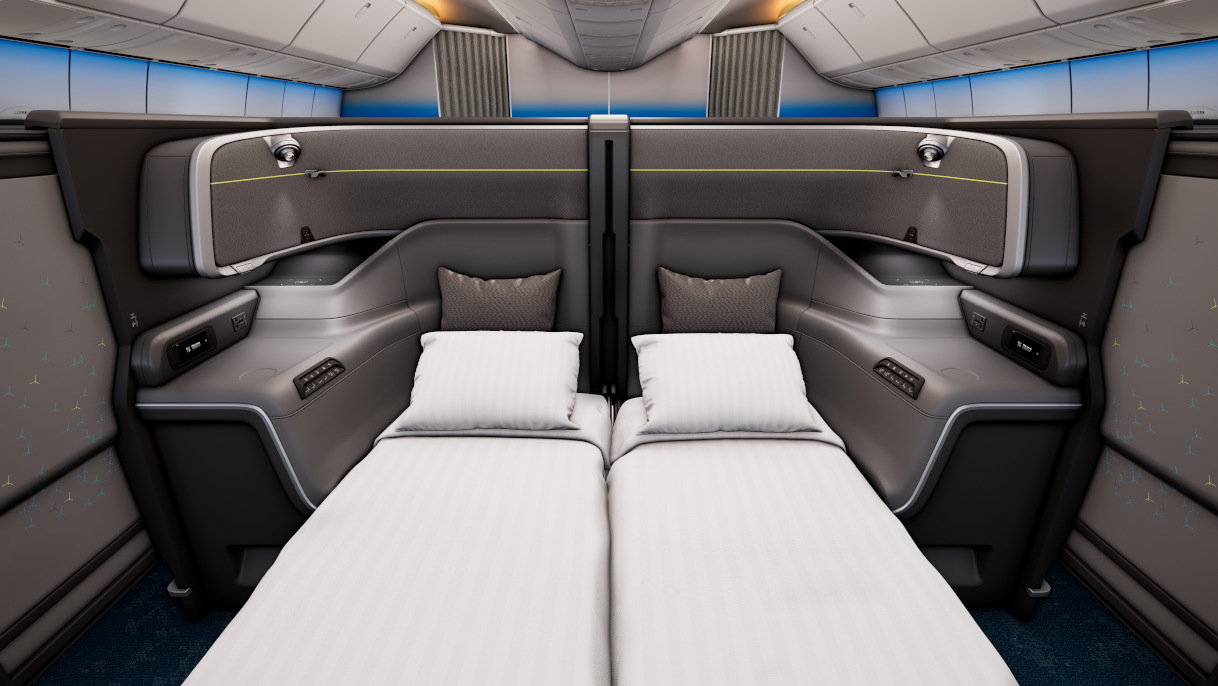

Singapore Airlines has finally unveiled its next-generation long-haul business class seat, and the specifications sound promising. Sliding privacy doors, a bigger footwell, improved reclining and plenty of technology. It’s the sort of upgrade frequent flyers have been waiting years to see, and we certainly can’t wait to give it a try. Unfortunately, when the airline pulled back the curtain on 6 November 2026, much of the discussion centred on something considerably less technical: the colour scheme.
The new cabin forms part of a wider investment exceeding S$2 billion across all four travel classes. Yet its grey upholstery, dark panels and rather enthusiastic yellow accents have divided the aviation community. Some have compared it to a dentist’s chair, while others see an unfortunate resemblance to Singapore Airlines’ budget subsidiary, Scoot. The reaction has become serious enough for the airline’s CEO to acknowledge the criticism publicly.
From Premium Cabin to Dentist’s Chair
Singapore Airlines has spent decades building a reputation for premium cabins with warm colours, understated finishes and distinctive styling. Its existing business class seats may be showing their age, but they still look every bit like Singapore Airlines. The new design takes a rather different approach. Created by BMW Group’s Designworks and manufactured by Recaro, it introduces cool greys, metallic finishes and bright yellow highlights that feel considerably more clinical.
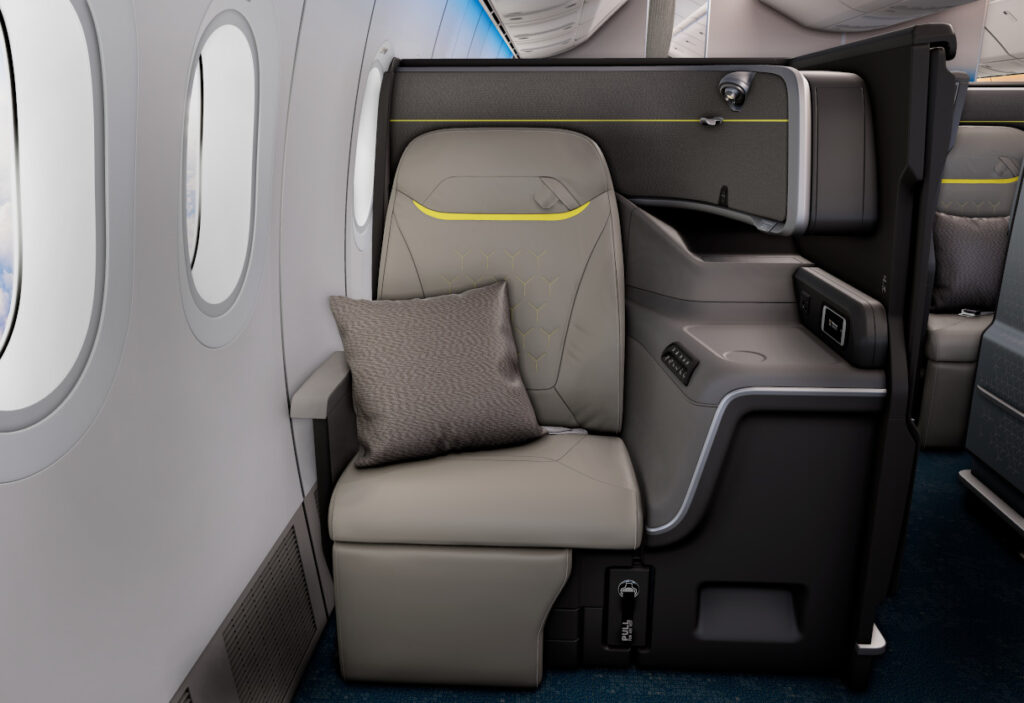
The comparisons haven’t been particularly flattering. One commentator highlighted the emerging ‘Scoot J’ nickname, while other commentators likened the seats to gaming chairs and medical furniture. Writing for Channel News Asia, marketing professor Julien Cayla remarked that he wouldn’t bat an eyelid if somebody told him this was Lufthansa’s new business class cabin. That made us chuckle. It’s not often anyone suggests that an airline might be taking interior design inspiration from Lufthansa.
There’s also an unfortunate contrast with the new first class cabin, which retains warmer colours, softer finishes and Singapore Airlines’ familiar batik patterns. The two cabins look as though different airlines commissioned them. In fairness, different design agencies did create them.
And this isn’t simply a few disgruntled aviation bloggers looking for something to complain about. Social-listening company CARMA found that 49.4% of monitored online conversations about the cabin refresh carried negative sentiment. Those figures, while not representative survey of Singapore Airlines passengers, demonstrate how much attention the new appearance has attracted.
Singapore Airlines Responds
Singapore Airlines initially defended the design. In a statement reported by Channel News Asia, the airline explained that it had carefully selected the colours, materials and finishes to create a contemporary cabin. It also pointed to adjustable lighting and the improved comfort and privacy of the seats.
CEO Goh Choon Phong subsequently acknowledged the criticism. Speaking at a company town hall on 11 November, he said: ‘We’ll look at it, we’ll see what is feasible.’ At the airline’s financial results briefing the following day, he confirmed that Singapore Airlines would review customer feedback and explore possible refinements. That’s a notable response from an airline that has spent years developing a flagship product, although it hasn’t committed to changing anything.
There’s still time before the first seats enter service, but changing an aircraft interior isn’t quite like returning a sofa because the colour looked different online. Materials, manufacturing and certification all complicate things. For now, the airline appears willing to listen, which is more encouraging than pretending nobody has noticed the resemblance to a dental surgery.
There’s a Very Good Seat Hiding Underneath
Here’s the frustrating part. Look beyond the colours, and Singapore Airlines appears to have addressed several longstanding weaknesses in its existing business class product. We’ve flown its current A350 business class from Amsterdam to Singapore and found plenty to like. The seat is exceptionally wide and comfortable, but converting it into a bed involves physically flipping the backrest over. The diagonal sleeping position and restricted footwell aren’t ideal either.
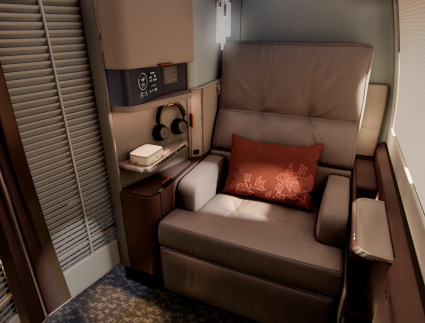
The new Recaro seat promises a much more natural transition from sitting to sleeping, with electronically adjustable lumbar and leg support. Every passenger gets a sliding privacy door and direct aisle access in a 1-2-1 layout. The fully flat bed measures 79 inches (201cm) long and up to 24 inches (61cm) wide. Selected centre seats can also become companion beds, allowing couples to sleep beside each other with the divider lowered.
Other improvements include a redesigned table that frees up footwell room, wireless charging, USB-C ports, Bluetooth audio and 4K entertainment screens. Smart controls integrated with KrisWorld will even remember passengers’ preferred seating positions for future flights. These are meaningful upgrades, particularly for anyone who has wrestled with Singapore Airlines’ existing flip-over bed after a few glasses of Champagne.
From what we’ve seen, this looks like a very comfortable seat, with a great deal of thought put into how passengers actually use it. The larger footwell, easier bed conversion, accessible storage and physical controls suggest that practical considerations have played a big part in its development. That’s why we think the criticism over the colours is such a shame. There appears to be a genuinely excellent product underneath an unpopular outfit.
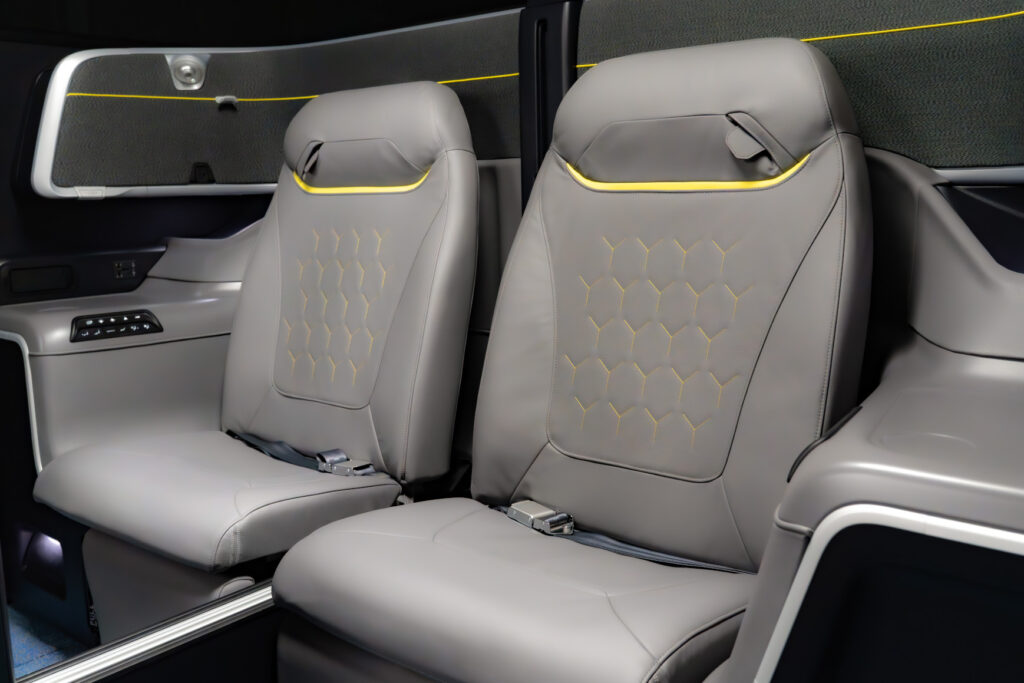
There is one specification that gives us pause, however. The new A350 seat measures just 22 inches wide, compared with the 28-inch width of the existing long-haul business class seat. That’s a substantial reduction on paper. The Boeing 777-9 version fares slightly better at 24 inches. Seat-width measurements don’t tell us everything about comfort, especially with the redesigned bed and footwell, but we’d like to test that compromise before declaring the new product an improvement across the board.
Premium Economy Looks Promising Too
While most of the attention has fallen on the premium cabins, we’re also rather taken with the new premium economy seat. Singapore Airlines has opted for a smart, understated design with generous cushioning, adjustable leg and footrests and a 40-inch seat pitch. That’s two inches more than its existing premium economy product, alongside an increase in maximum recline from eight to nine inches.
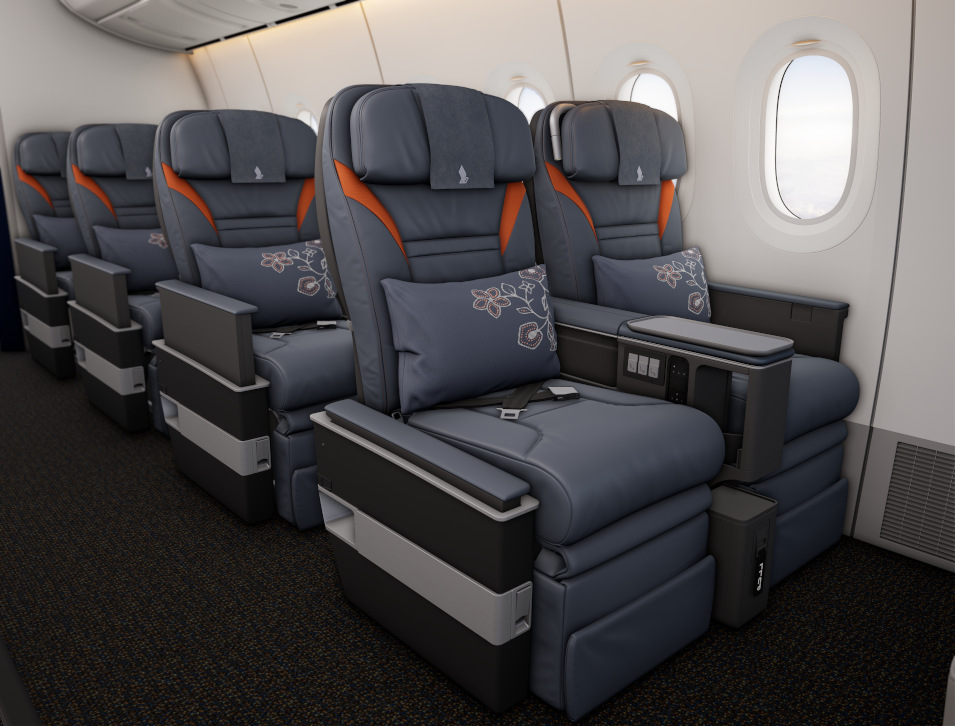
The new seats also get 16-inch 4K entertainment screens, Bluetooth audio, dedicated storage and a separate cocktail tray. From the photographs, they look particularly comfortable, and we’re just as keen to put them to the test. One catch: the new premium economy and economy seat designs are currently exclusive to the Boeing 777-9. The A350 retrofits will retain their existing seats in those cabins.
When Will the New Seats Enter Service?
Passengers will have to wait a little longer to form their own opinions. In our July article about Singapore Airlines’ delayed business class launch, we reported that the first retrofitted A350 would enter service in the first quarter of 2027, having already slipped from its original second-quarter 2026 target. Barely four months later, that date is looking optimistic too.
Singapore Airlines now expects the new cabins to enter service from the second half of 2027. That’s another delay of at least several months, with supply-chain constraints and seat certification continuing to complicate the programme. It’s disappointing news for passengers who have already spent years waiting for Singapore Airlines to catch up with competitors introducing business class suites with privacy doors.
The airline plans to retrofit 41 Airbus A350s, including long-haul and ultra-long-range variants, while introducing the new cabins on its incoming Boeing 777-9 fleet. The long-haul A350s will receive 42 business class seats, the A350-900ULRs will have 70, and the 777-9s will carry 54. The new seat designs have secured certification for installation on the 777-9, but the A350 installations still await approval. The Boeing aircraft itself also remains subject to certification and delivery.
The wider investment includes new first class suites, plus redesigned premium economy and economy seats for the 777-9. Singapore Airlines hasn’t announced which routes will receive the refreshed cabins first, so there’s little point choosing a future flight specifically for the new seat just yet.
BG1 Verdict
We can understand why Singapore Airlines wanted something contemporary. Premium cabins have moved towards enclosed suites with plenty of technology, and the new seat looks well equipped to compete. But modern doesn’t have to mean clinical. The combination of pale grey upholstery and bright yellow trim feels strangely disconnected from an airline whose visual identity has always been one of its strengths.
We also think it’s a shame that the controversy has overshadowed what looks like a seriously well-considered design. There’s plenty to admire here, from the improved sleeping arrangements to the smaller practical details that can make a long-haul flight considerably more comfortable. A good business class seat needs to work beautifully, not just photograph well, and Singapore Airlines appears to have put plenty of effort into getting that right.
Nobody is booking a 13-hour business class flight purely for the colour of the armrest. We’d happily take a comfortable bed, more privacy and a decent footwell over attractive upholstery and a dreadful night’s sleep. Our greater concern is the reduction in seat width, although we’ll reserve judgement until we’ve flown the product.
We’re excited to try the new business class, and the comfortable-looking premium economy seat has caught our attention too. It’s just rather unfortunate that, after years of development, so many people looked at the finished product and thought of their dentist.

Leave a Reply