
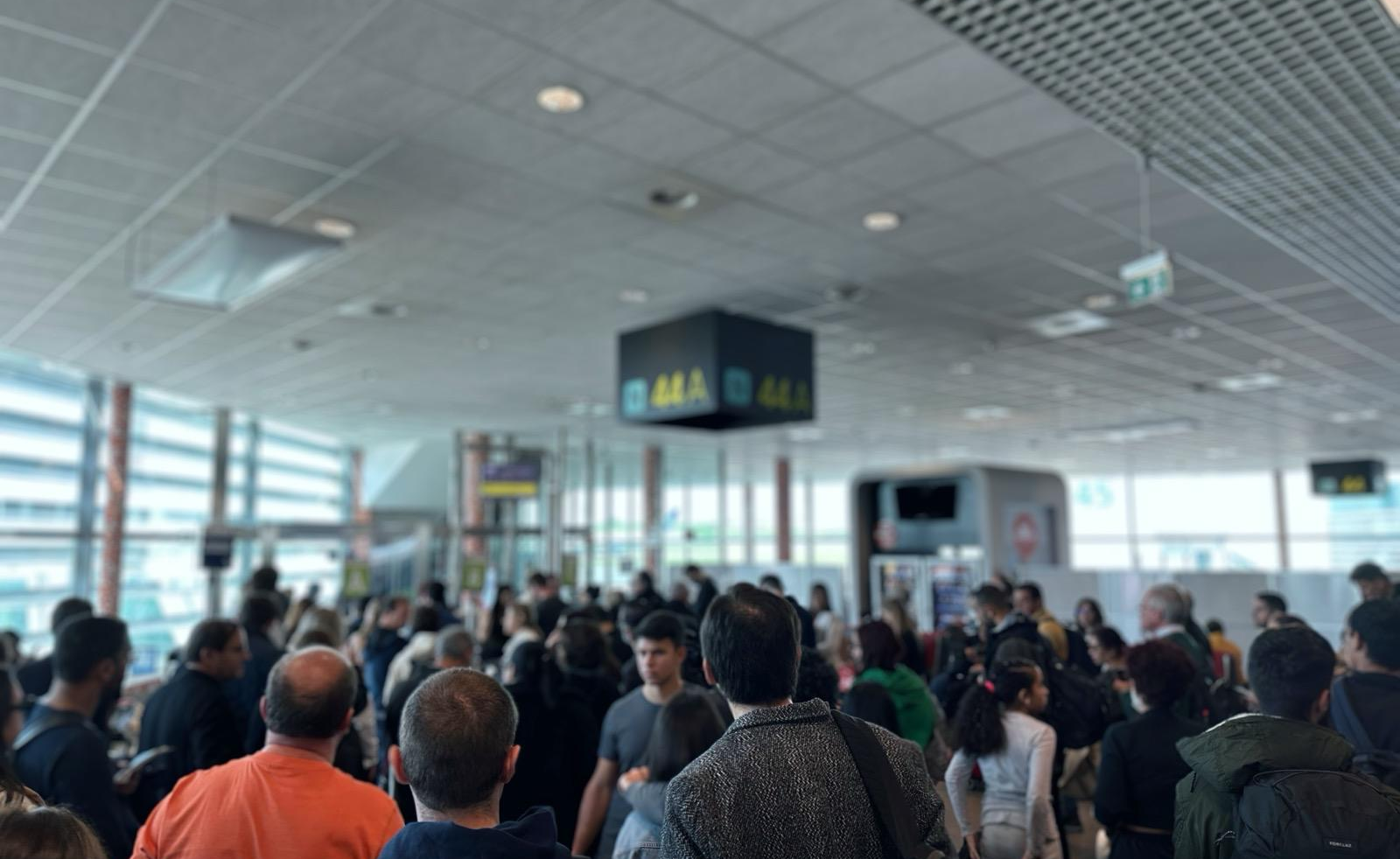

Nothing says modern border control like a queue that makes the old rubber stamp look efficient. The Lisbon Airport biometric meltdown is not just another airport grumble. It is what happens when a data-heavy system lands in an airport already short of space, staff and operational slack.
I’ve flown through Lisbon before the EU’s Entry/Exit System fully kicked in, and the queues were already poor. Short connections at LIS never felt clever. Add mandatory biometric checks for non-EU travellers, including UK passport holders, and the airport’s weak point becomes very exposed.
Biometric Borders Were Meant To Help
In theory, EES makes sense. Replacing passport stamps with digital records should improve accuracy, track the 90-days-in-180 rule properly and end the late-night stamp archaeology many travellers have seen at border desks.
For UK travellers, this is the practical post-Brexit reality. Most Schengen trips now put UK passport holders in the third-country queue. EES collects passport data, facial images and fingerprints for short-stay visitors, so the border check is no longer just a glance at a passport.
That might work at a roomy airport with enough kiosks, staff and queue management. Lisbon Humberto Delgado Airport is not that airport.
Why Lisbon Is Struggling
The problem is not biometrics alone. It is biometrics plus peak passenger flows, limited terminal space, unfamiliar passengers, slow kiosks and constrained staffing.
A process that takes 70 seconds in a trial can take several minutes in real life. Passports fail to scan. Fingerprints misread. People miss instructions. Then the queue spills backwards, and border control becomes crowd control.

Reports have described passengers waiting around two hours for EES processing and missing flights. Portuguese authorities even suspended biometric collection on departures at Lisbon, Porto and Faro to reduce missed departures, while arrivals continued using the checks. If a system has to be paused to stop people missing flights, it has not landed properly.
UK Travellers Need To Rethink Lisbon Connections
This is where UK travellers should adjust their instincts. Lisbon may still price well, especially with TAP connections to Brazil, the US, Africa and Europe. But a cheap fare via LIS is not cheap if the connection depends on a border process that can swallow two hours.
Departure queues are especially damaging. An arrivals queue is miserable, but you usually reach the city eventually. A departure queue can leave the aircraft pushing back without you, despite arriving at the airport in good faith.

Do not book short connections through Lisbon until these problems are clearly resolved. If Lisbon is unavoidable, build in a long layover, especially when entering or leaving Schengen.
For flights to the UK, US or other non-Schengen destinations, treat passport control as a major step after security. Keep your passport, boarding pass and status details ready in case staff prioritise imminent departures. Check GOV.UK Portugal travel advice and airline alerts, but do not assume app notifications reflect the real border queue.
BG1 Verdict
The Lisbon Airport biometric EES meltdown is not only passenger irritation. TAP depends on LIS working as a credible connecting hub. If travellers stop trusting Lisbon connections, they will book via Madrid, Dublin, Amsterdam, Frankfurt or Paris instead.
EES may improve with time, but Lisbon shows that “digital” does not automatically mean quicker. Until LIS proves it can process passengers reliably, avoid short connections through Lisbon and connect elsewhere where practical.
Give us a follow on TikTok and Instagram.



Leave a Reply