
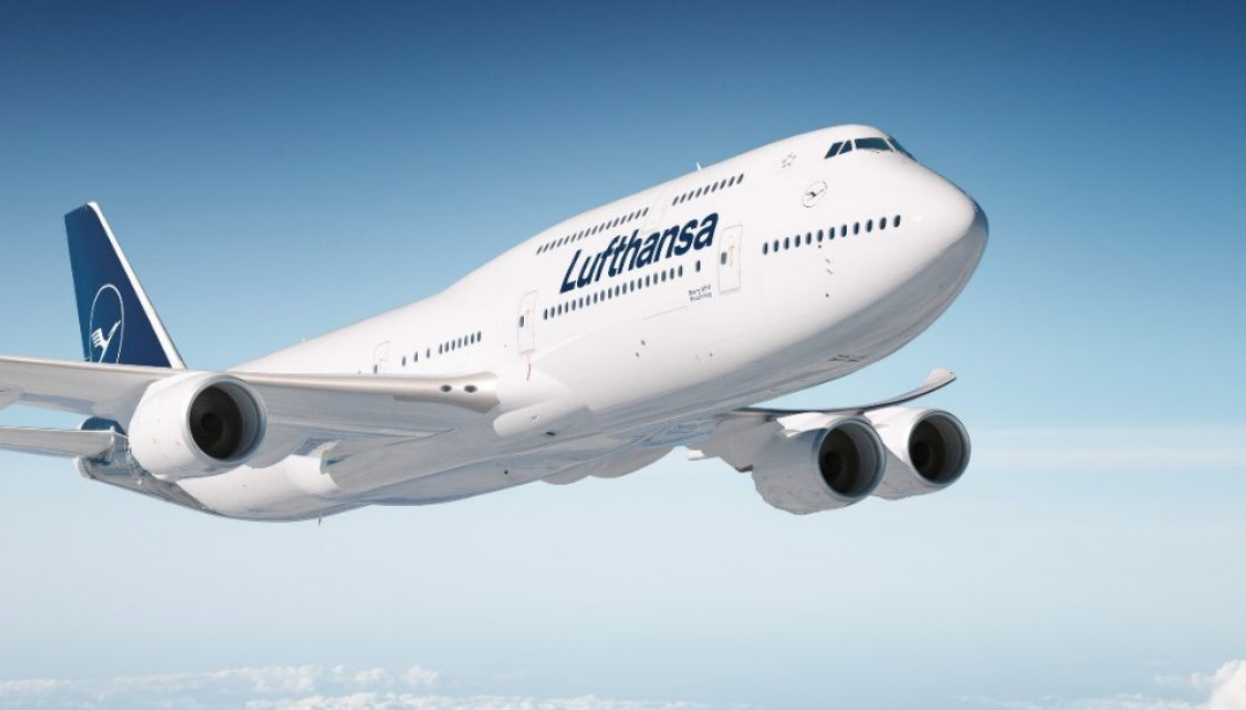

Launched on 1 January 1993, Lufthansa’s Miles & More programme has changed considerably since we first reviewed it. The biggest difference is that earning miles and earning airline status are now two separate things. Miles remain the currency you collect and spend. Elite status uses Points, Qualifying Points and, at the very top, HON Circle Points. The result is a status system that’s much easier to understand than the old combination of status miles, fare classes and distance flown.
Redemptions have changed too. Lufthansa moved several of its airlines away from fixed award pricing in 2025, then extended the system again in 2026. There’s more change coming. ITA Airways adopted Miles & More in April 2026, while Lufthansa Group plans to rename the scheme Lufthansa Group Miles & More by the end of the year.
We’ve also been looking again at where we credit our own Star Alliance flying. That’s become more pressing since Aegean announced much tougher Miles+Bonus status requirements from November 2026. So, this updated Lufthansa Miles & More review asks a simple question: does the programme now deserve your Star Alliance flying?
Points Earning Rates on Continental & Intercontinental Flights
Miles & More separates award miles, which you can spend, from Points, which count towards elite status. For Lufthansa flights booked through a Lufthansa Group channel, standard members generally earn miles using this formula:
Airfare x 4
Members with frequent flyer status receive 50% more:
Airfare x 6
For this calculation, airfare means the ticket price plus surcharges levied by the Miles & More partner airline. Paid extras such as seat selection and excess baggage don’t count. Depending on how and where you book, some tickets instead earn miles according to booking class. So the familiar frequent flyer alphabet soup hasn’t disappeared completely.
This means the old assumption that a longer flight automatically earns more redeemable miles no longer works particularly well. A costly European ticket can earn more miles than a heavily discounted intercontinental one. Status Points work completely differently. The important distinction is simple: what you spend largely determines the miles you earn, while how and where you fly determines your progress towards status. For us, that’s a fairly sensible separation.
How Easy is it to Redeem Points for Flights?
This part of our Lufthansa Miles & More review is less convincing. On 3 June 2025, Austrian Airlines, Lufthansa, Lufthansa City Airlines and SWISS moved away from fixed award pricing. Miles & More calculates the required miles individually using factors including fare, cabin, route, travel date and booking date. Discover Airlines and Air Dolomiti joined that system on 3 March 2026. Other Miles & More partners generally remain on the award chart. These include Brussels Airlines, Eurowings, Croatia Airlines, ITA Airways, LOT Polish Airlines and Luxair.
There are advantages to flexible pricing. Lower mileage prices can appear when fares are cheap, while different award fares give you more choice over baggage, seat selection, changes and refunds. But we prefer knowing what we’re saving towards. Under a traditional award chart, you can look at your balance and know roughly how many more miles you need for a business class redemption. Variable pricing makes that relationship less clear. Taxes, fees and airline surcharges also remain payable separately. These can take a sizeable bite out of the value of some premium cabin redemptions.
Miles & More does offer some useful discounts. Its Award Flight Specials can cut the standard mileage requirement by up to 50%, with offers starting at 12,000 miles. Fly Smart awards, the last-minute version of the same idea, save up to 40%. As ever, don’t assume you’ve found a bargain until you’ve looked at the final cash contribution. Redeeming Miles & More miles isn’t especially difficult. Getting consistently good value from them is the harder bit.
Introduction to the Status Tiers
Miles & More has three main status tiers, and all of them are measured within a calendar year. Frequent Traveller requires 650 Points and 325 Qualifying Points. Senator requires 2,000 Points and 1,000 Qualifying Points. HON Circle requires 6,000 HON Circle Points. Frequent Traveller corresponds to Star Alliance Silver, while Senator and HON Circle both give you Star Alliance Gold.
The distinction between Points and Qualifying Points is crucial. You can earn Points on eligible Star Alliance flights, as well as flights on Lufthansa Group and other Miles & More partner airlines. Qualifying Points come from a much smaller group. These currently include Lufthansa, Lufthansa City Airlines, SWISS, Austrian Airlines, Brussels Airlines, Discover Airlines, Eurowings, Air Dolomiti, ITA Airways, Croatia Airlines, LOT Polish Airlines and Luxair. The arrival of ITA is particularly interesting. We’ve previously looked at why ITA chose Lufthansa stability after leaving SkyTeam, and its adoption of Miles & More now makes it part of the core status-earning group.
You could earn all 2,000 Points required for Senator on other Star Alliance airlines and still fail to qualify. Without 1,000 Qualifying Points, you don’t get Senator. That’s probably the most important lesson from this Lufthansa Miles & More review. Miles & More rewards loyalty to its own airline ecosystem, rather than Star Alliance generally.
What Senator Adds Beyond Star Alliance Gold
Senator and a Star Alliance Gold card from any other programme aren’t the same thing, even though the alliance logo looks identical. Start at the airport. Senator gets you First Class check-in at Lufthansa Group airports, even when you’re travelling in economy. A Star Alliance Gold card from elsewhere gets you the business class counter. Lounges are where most people assume the gap sits, and most people are wrong. We’ll come back to that below.
The real value sits in the programme itself. Two eVouchers arrive when you qualify, and two more on every renewal. An eVoucher is an upgrade credit, and one of them lifts a European economy ticket into business class. The Companion Award is the one people overlook. One travel companion per booking flies an Award Flight for half the miles. Senators can also claim a confirmed seat in their booked cabin on a sold-out flight, up to 48 hours before departure. Star Alliance Gold buys a better place in the queue, not a guarantee.
Free advance seat selection applies in most booking classes. It covers your companions too on Austrian Airlines, Brussels Airlines, Lufthansa and SWISS. Your miles stop expiring for as long as you hold status, which removes a nagging worry if you’re saving towards something big. Link your accounts and Marriott Bonvoy Gold Elite follows, for as long as you stay Senator. Senators also get a dedicated service line, which is more useful than it sounds when a connection collapses. Stay the course and 40,000 cumulative Qualifying Points earns Senator for life.
There’s a card angle for UK readers as well. Miles & More credit cards left the UK market years ago, but Lufthansa Group and Currensea launched a UK Miles & More debit card in September 2026. The annual fee is £180, waived for a Senator’s first year and waived for as long as you hold HON Circle.
What Senator won’t unlock is the First Class Lounges or the Frankfurt First Class Terminal. Those need HON Circle, or a first class ticket on Lufthansa or SWISS. So here’s the honest summary. Beyond that check-in desk, Senator changes little about your airport routine that a Star Alliance Gold card doesn’t already cover. It changes a lot about what your account can do.
Tier Point Accrual Rates on Continental & Intercontinental Flights
Miles & More doesn’t officially call them tier points, but its status Points work in much the same way. The calculation is refreshingly simple. You only need to know your cabin and whether Miles & More classifies the flight as continental or intercontinental.
| Cabin | Continental | Intercontinental |
|---|---|---|
| Economy | 20 | 60 |
| Premium economy | 20 | 80 |
| Business class | 40 | 200 |
| First class | 40 | 400 |
That’s per flight sector, and distance doesn’t determine the number of Points. It’s an important distinction, and the zone map contains a few surprises. A business class flight from Frankfurt to Tel Aviv crosses Miles & More zones and earns 200 Points, despite taking around four hours. Fly Frankfurt to Cairo instead, at a similar length, and you’ll collect 40. Egypt sits inside the Miles & More European zone, alongside Algeria, Libya, Morocco and Tunisia. Israel doesn’t. So don’t blindly chase distance when planning Miles & More status. Look at the zone classification first.
A connecting itinerary can work rather nicely too. For example: London – Frankfurt – Singapore
Business class earns 40 Points for London to Frankfurt and 200 Points for Frankfurt to Singapore. Do the same on the way home and you’d earn 480 Points for the return trip. If every sector is operated by a Qualifying Points airline, you’d also receive 480 Qualifying Points.
This simplicity is one of the strongest parts of our Lufthansa Miles & More review. There’s no distance calculator. You don’t need to discover that booking class D earns one percentage while P earns another just to work out your status progress. For status purposes, the table tells you what you’ll get.
Approximate Cost & Travel Required to Reach Senator Status
This section used to be relatively easy to express as a cash figure. It isn’t any more. Because status Points aren’t based on ticket price, there’s no real minimum spend required for Senator. Someone repeatedly finding discounted business class fares could qualify much more cheaply than somebody buying expensive flexible tickets. The more useful measure is the amount of flying required.
Senator needs 2,000 Points, including at least 1,000 Qualifying Points. An intercontinental business class sector earns 200 Points. Therefore, if every sector also earns Qualifying Points, 10 intercontinental business class sectors would earn Senator. That’s five return trips if you flew direct. A UK traveller connecting through Frankfurt, Munich or Zurich can do it with less intercontinental flying because the European connections earn Points too. Take: London – Frankfurt – São Paulo – Frankfurt – London in business class.
You’d earn:
40 + 200 + 200 + 40 = 480 Points
Four identical trips produce 1,920 Points. Yes, Lufthansa leaves you sitting an irritating 80 Points short of Senator. But you don’t need a fifth intercontinental trip. One continental business class return earns exactly another 80 Points, taking you to the 2,000-Point threshold. Those four trips have already banked 1,920 Qualifying Points, so the top-up return only needs to produce ordinary Points. Any Star Alliance carrier will do it. So, for a UK traveller using a Lufthansa Group hub, Senator could mean four intercontinental business class returns plus one short-haul European business class return.
There’s a bigger catch if you spread your flights across Star Alliance. Take an eligible intercontinental business class flight on an alliance member that doesn’t award Qualifying Points. You can still earn 200 ordinary Points, but it won’t move that separate 1,000 Qualifying Points counter. This is why choosing a programme based purely on its headline Star Alliance Gold threshold can be misleading. We’ve compared the wider options in our guide to the best Star Alliance frequent flyer programmes. The right programme increasingly depends on which airlines you actually fly, rather than which alliance logo appears on their aircraft.
Overall Quality of the Lounges & Cabin Products
This is an area where Lufthansa remains something of a moving target. Its established Business and Senator Lounges are generally solid rather than spectacular. Senator Lounges are the better proposition, with improved food, drinks and facilities. But don’t expect every Lufthansa lounge to compete with the strongest first class lounges in Asia or the Middle East.
Importantly, Senator Lounge access isn’t exclusive to Miles & More Senator members. Eligible Star Alliance Gold members can also use Lufthansa Senator Lounges when travelling on a qualifying Star Alliance flight. That includes status earned through programmes such as Aegean Miles+Bonus. We’ve reviewed the Lufthansa lounge at Heathrow Terminal 2, which gives a good idea of what UK-based Lufthansa frequent flyers can expect before departure.
The more interesting changes are happening on board. Lufthansa’s new Allegris cabins now operate on selected Airbus A350-900s based in Munich and Boeing 787-9s based in Frankfurt. The new business class is a major change from Lufthansa’s older product. It adds direct aisle access and several different seat types. The problem is consistency. Plenty of aircraft still carry the old business class seat. It’s perfectly usable, but the 2-2-2 layout and lack of direct aisle access from every seat increasingly look dated. Checking the aircraft and seat map before booking is therefore more important with Lufthansa than we’d like.
As we set out above, Senator does carry benefits that a generic Star Alliance Gold card can’t match. Lounge access simply isn’t one of them.
BG1 Verdict
Miles & More has become a much more interesting status programme than the one we previously reviewed. We particularly like the Points system. Knowing that an intercontinental business class sector earns 200 Points is wonderfully straightforward. There’s no distance calculator or percentage multiplier needed just to work out your status earning.
But the Qualifying Points requirement is the sting in the tail. Miles & More may sit within Star Alliance, but its status system pushes you strongly towards Lufthansa Group and selected Miles & More partners. Flying other Star Alliance airlines can earn ordinary Points. Those flights won’t necessarily earn the Qualifying Points needed for Senator. That’s a significant restriction for a Star Alliance free agent.
The redemption side is less convincing too. Variable award pricing across much of Lufthansa Group removes some of the certainty we like from frequent flyer currencies. Taxes and airline surcharges can further weaken premium cabin redemptions. There’s a counterweight, though. Senator carries real benefits that a generic Star Alliance Gold card doesn’t, from First Class check-in to the Companion Award and two annual upgrade eVouchers.
So who should choose Miles & More? If you regularly fly Lufthansa Group or another Qualifying Points airline, it’s a compelling programme to consider. For a UK traveller connecting through a Lufthansa Group hub, Senator can be achieved with four qualifying intercontinental business class returns plus one continental business class return. That’s a more attractive proposition than the headline 10 intercontinental sectors initially suggests.
If your flying jumps between whichever Star Alliance carrier has the best fare, compare the programmes before committing. That’s particularly important in late 2026. Aegean Miles+Bonus has historically been one of the obvious alternatives, but its Gold qualification and renewal requirements become considerably tougher from 5 November.
Our Lufthansa Miles & More review therefore comes down to one distinction. Miles & More is becoming an increasingly good Lufthansa Group loyalty programme. It isn’t necessarily the best Star Alliance loyalty programme.
Our tip: before crediting your first flight, map out the next 12 months of travel. Separate the sectors that earn Qualifying Points from those that earn ordinary Points only. Then calculate whether you can realistically clear both Senator thresholds. Five minutes with a spreadsheet now can save you discovering in December that you have 2,000 Points and nowhere near enough Qualifying Points.
Where Can I Sign Up?
If our Lufthansa Miles & More review has piqued your interest, you can sign up free through the Miles & More website. Once registered, add your membership number to eligible bookings. You can then track your miles, Points, Qualifying Points and status progress through the Miles & More website or app.
Before committing, we’d also read our comparison of the best Star Alliance frequent flyer programmes. It puts Miles & More in context against the other realistic routes to Star Alliance status.


Leave a Reply