


Most BA flyers can recite the tiers from memory. Bronze gets you seat selection and boarding group 3, Silver gets you group 2 and into the lounge, Gold gets you Boarding Group 1 and into the better lounge. Then there’s the British Airways Gold Guest List (GGL), which sits above all of it and which BA barely bothers to advertise as a tier at all. There’s no badge in the app, no marketing push, no “you’re halfway there” nudge email. Just a line buried in the tier comparison tables.
After a decade of tracking tier points through three separate programme rebrands, this silence reads as deliberate. GGL was never designed to be chased from zero. It is what happens to people whose jobs already put them in the front cabin twenty times a year, and BA knows that a marketing campaign won’t create more of them.
What Gold Guest List Actually Is
Technically, Gold Guest List is not a separate tier. You remain a Gold member, holding a Gold card, with Gold’s benefits. GGL is a layer of extras bolted on top for people who fly considerably more than Gold requires. That’s why it doesn’t get its own campaign: there’s nothing new to name.
One common misconception is worth killing off early. GGL maps to Oneworld Emerald, exactly the same as ordinary Gold. There is no hidden invitation-only alliance super-tier hiding behind it. When a GGL member checks in with Cathay Pacific or Qatar Airways, they’re an Emerald, same as the Gold member behind them in the queue. The agent often treats them identically, which is fair enough.
Timing is worth noting for anyone modelling a push. BA membership years now run from 1 April to 31 March, so your earning window is fixed to the financial year rather than your join date.
How Do You Qualify?
The numbers are blunt. Per BA’s current terms, a new member needs 65,000 tier points (the credits that move you up the status ladder), of which at least 52,000 must come from qualifying British Airways activity. That includes BA-marketed flights, qualifying add-ons and British Airways Holidays packages, so it is broader than flying alone. Renewal drops to 40,000 tier points, with at least 32,000 from the same qualifying sources. The reward for reaching GGL is a slightly smaller mountain next year, which is either generous or faintly insulting depending on your mood.
That restriction still does real work, and the detail people get wrong is what counts as BA activity. The test is the marketing carrier, not the metal. A partner-operated sector sold under a BA flight number counts as BA-marketed, while the same aircraft sold under an American Airlines or Iberia number does not. So a year built mostly on partner-coded Doha and Madrid flying will hit a ceiling well short of the line, even if plenty of those seats were technically Oneworld.
One more rule applies at every tier and catches some people out. Reward Flights booked with Avios (the points currency BA and its partners use) do not earn tier points.
What You Actually Get
The headline benefits of British Airways Gold Guest List:
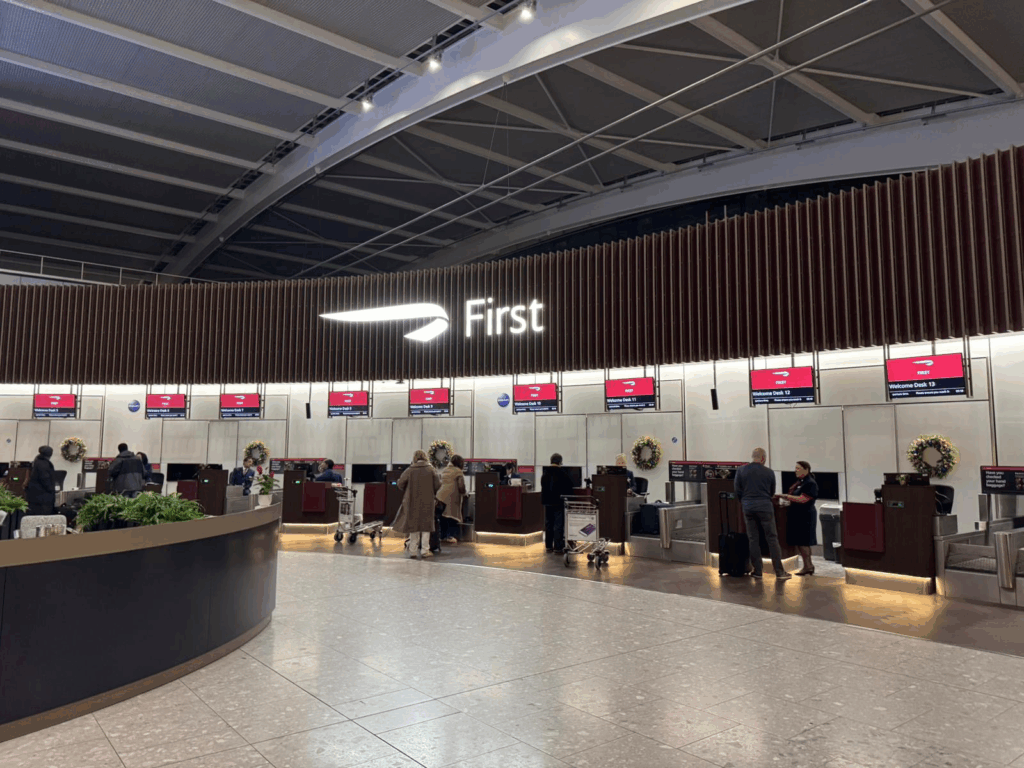
- Concorde Room access at Heathrow Terminal 5, plus one guest, without needing a First ticket
- Chelsea Lounge access at New York JFK, plus one guest
- Gift status at the start of the membership year: one Gold Partner card, plus Silver for two other people
- A dedicated priority phone line, staffed 24 hours

Then there are the redemption perks, widely reported as two guaranteed redemptions a year that force open up to five reward seats in fare classes A, D, T and B. Beyond GGL, 75,000 tier points is said to unlock a benefit converting cash tickets in those same classes into Avios tickets, with a further choice at 90,000 and every 15,000 after. Treat these as well-established rather than clearly documented, because BA’s public wording on them is thin and has shifted before.
Underneath all of that, GGL members still hold everything ordinary Gold gives: First Wing security at T5, First lounge access, Emerald reciprocal benefits, exit-row seating and priority baggage. There are also milestone rewards along the way that readers confuse with GGL itself. At 35,000 tier points BA awards a Gold Upgrade for Two voucher, and at 50,000 you get two Gold Upgrade for One vouchers.
How Much Flying Is 65,000 Tier Points?
Earning now works in two parts. Base earning is 1 tier point per £1 of eligible fare and carrier-imposed charges, with government and airport taxes excluded. On top of that, from 1 April 2026, every flown sector attracts a fixed bonus based on cabin and fare type: 175 to 375 for short-haul business, 275 to 575 for long-haul premium economy, and 500 to 1,100 for long-haul business, per BA’s published bands. Ancillary spend like seats and bags doubled to 2 tier points per £1, which is a handy top-up rather than a standalone strategy.
Take a business traveller flying fully flexible Club World to New York. Say the fare and carrier charges come to £4,200 once taxes are stripped out, earning 4,200 base tier points. Add two sectors at the top of the bonus band, 1,100 each, and that single return delivers roughly 6,400. Repeat that ten times across a year and you’re at 64,000, brushing the GGL line from flights alone.
Then take the same route on the cheapest available Club World fare. A £1,600 eligible fare earns 1,600 base points, and a restricted fare sits at the bottom of the bonus band, so 500 per sector rather than 1,100. That’s about 2,600 for the return, meaning you’d need 25 of those trips. The cabin is identical, the seat is identical, but the maths is not remotely close.
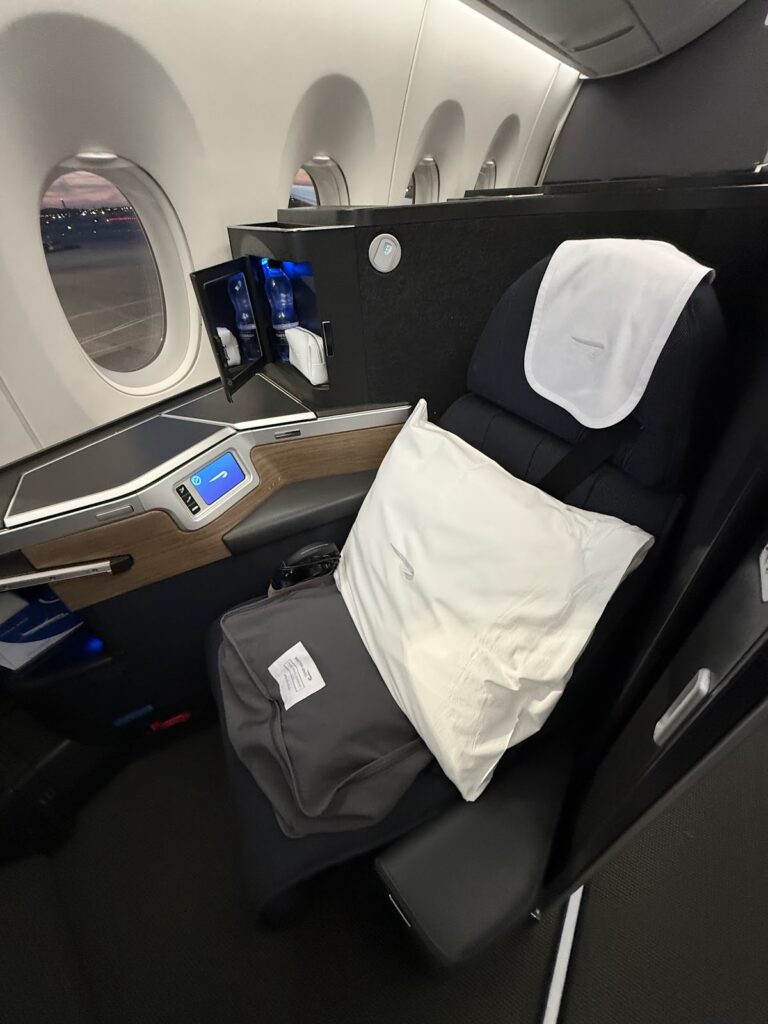
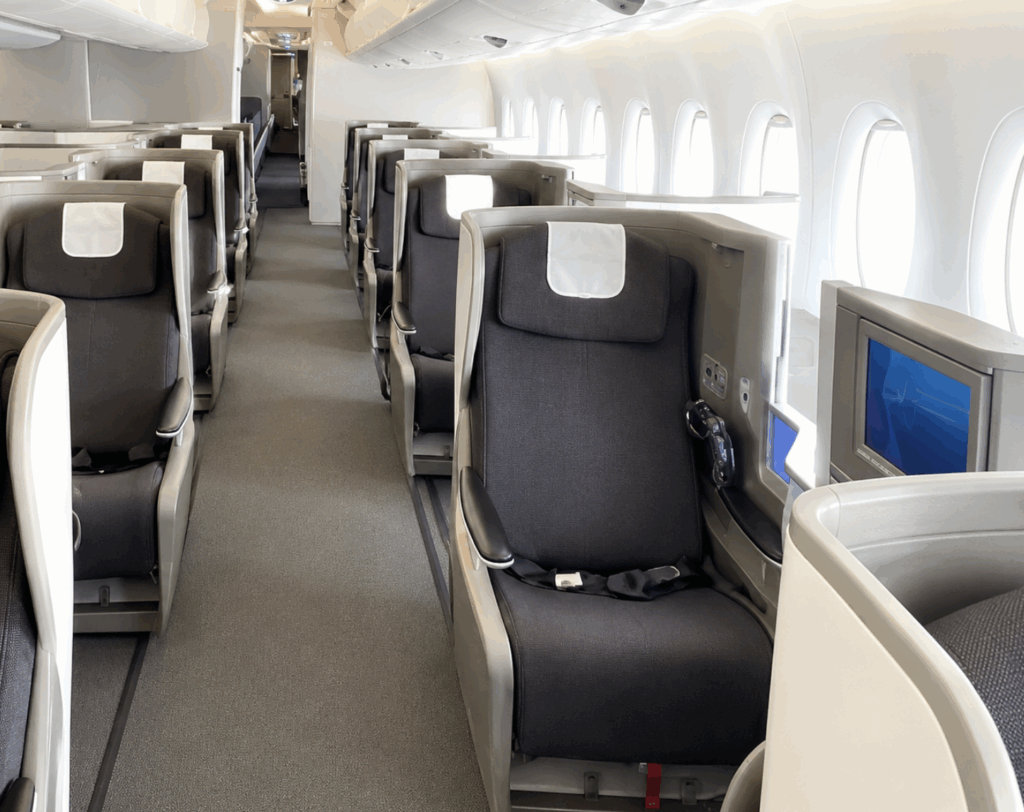
That gap is the real change. The 65,000 threshold hasn’t moved since the new Club model launched, but the speed at which different fare types get you there has changed substantially.
The BA Holidays Angle
Flights taken as part of a BA Holidays package attract a cabin and fare-type bonus in the same way as standalone bookings, with Basic Economy excluded. This isn’t a special scheme, it’s simply that package flights aren’t excluded, which is very easy to miss on ba.com.
The catch is how the base earning splits. Tier points from the package price are divided between the eligible passengers, so a £6,000 long-haul Club World holiday for two adults gives each member 3,000 base tier points, not 6,000 to whoever paid. BA’s own Holidays guidance also simplifies long-haul Club World to 500 tier points per sector, so unless you know the underlying fare is flexible, plan around that figure rather than the 1,100 top band.
Run the numbers on someone sitting at 40,000 tier points from work travel by October. On that £6,000 package they’d collect 3,000 base points plus roughly 1,000 in sector bonuses, so about 4,000 from a holiday they were taking anyway. That won’t close a 25,000 gap on its own. It can absolutely tip a 60,000 year over the line without changing a single travel decision.
Is It Worth Chasing?
Honestly, no, not deliberately. Ordinary Gold arrives at 20,000 tier points and already delivers the expensive parts: First Wing, First lounges, Emerald recognition, better reward availability, exit rows. The marginal 45,000 tier points buy you Concorde Room access, the Chelsea Lounge at JFK, some redemption perks and three gifted cards. That’s nice. It is not worth manufacturing through positioning flights, pointless upsells or fare padding, because the tier point cost per pound on cheap tickets is brutal.
BG1 Verdict
British Airways Gold Guest List is valuable as a by-product, never as a project. So here’s the useful reframe: rather than asking how to get GGL, open your BA Club account, and check whether the flying you’re already committed to this year puts you within 10,000 tier points of it. If it does, one sensible fare-class decision on a trip you were taking anyway might finish the job. If it doesn’t, enjoy Gold and spend the money on more holidays or status with other alliances instead.
Read: The Best Star Alliance Frequent Flyer Programmes and our review of the Top 3 SkyTeam Frequent Flyer Programmes.
Give us a follow on TikTok and Instagram.


Leave a Reply